
There are those who protect a forest by giving up hunting, those who recover ancient varieties of rice to tackle the climate crisis and those who fight invasive species to restore space for biodiversity. They are experiences that come from distant territories, but which all tell the same thing: the protection of nature also comes, and above all, from the communities that have inhabited those territories for generations.
It is one of the most important messages that emerged from the first hours of COP17 on biodiversity, underway in Yerevan until October 30th.
Here, it was introduced Local Biodiversity Outlooks 3a new international report that brings together 56 case studies on initiatives carried out by indigenous peoples and local communities to protect ecosystems. A document that shows how these communities concretely contribute to the objectives of the Kunming-Montreal Global Biodiversity Agreement, adopted in 2022, which aims to halt and reverse biodiversity loss by 2030.
The indigenous peoples who guard nature
According to the data referred to in the report, indigenous peoples and local communities manage or use territories that represent 42% of the emerged lands, including at least 36% of the areas considered fundamental for global biodiversity. An enormous heritage, which includes forests, mountains, wetlands and agricultural land.
Yet, despite their contributions, these populations continue to face obstacles in accessing finance, recognizing territorial rights and participating in conservation decisions.
An important first step came at COP16 in Cali, Colombia, in 2024, when countries approved the creation of a permanent body dedicated to indigenous peoples and local communities within the framework of the UN Convention on Biological Diversity.
Now, in Yerevan, the challenge is to turn that recognition into concrete results.
In India, villages protect forests and restore biodiversity
Among the experiences recounted in the report there are four projects carried out in India.
In Nagaland, a mountainous region in the north-east of the country, numerous villages have voluntarily chosen to protect parts of their forests, creating community conservation areas where hunting, logging and other extractive activities are limited to encourage the regeneration of ecosystems.
The Nagaland Community Conserved Areas Forumborn in 2014, today connects more than 407 conservation areas and involves a network of communities committed to the protection of almost 170 thousand hectares of forests.
View this post on Instagram
A significant transformation, because in some villages people who were once dedicated to hunting now participate in the surveillance of wildlife and the protection of habitats. An example of conservation that comes from the bottom, through shared rules and collective responsibility, without separating the protection of biodiversity from the life of the communities.
From ancient rice a response to climate change
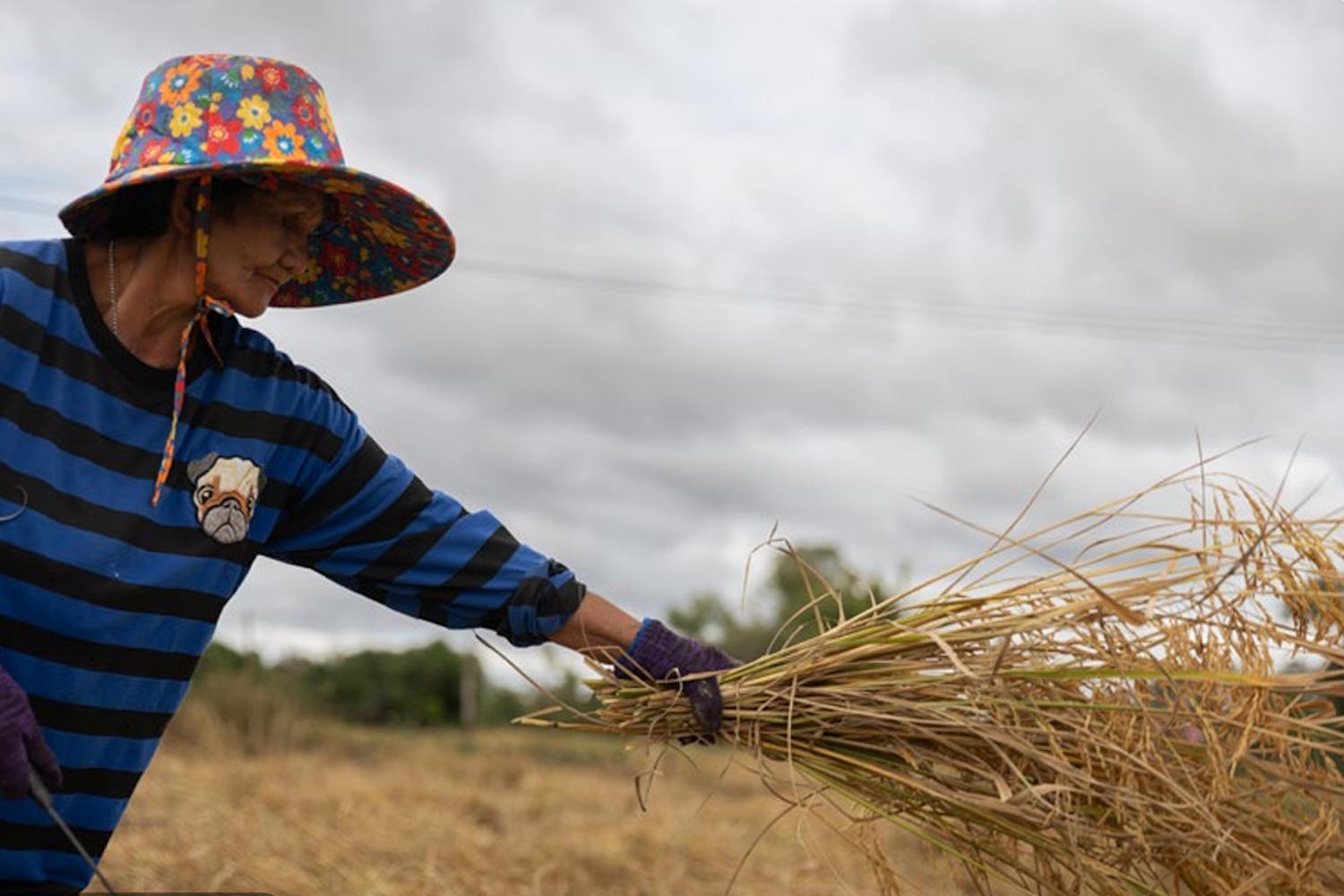
Another experience comes from the Sundarbans, the immense deltaic region between India and Bangladesh, increasingly exposed to rising seas, the intrusion of salt water into agricultural land and cyclones. Here, since 2021, local communities and researchers have been collaborating to recover traditional rice varieties, naturally adapted to difficult environmental conditions.
Germplasm conservation through traditional methods in Tipligheri, Indian Sundarbans @Dr. Bhaskar Deb Bhattacharya.
54 local varieties were examined, evaluating their resistance to climate stress, crop stability and economic convenience, and 19 showed particularly promising characteristics in salinity conditions.
The result demonstrates how crop diversity and agricultural knowledge passed down over time can offer important tools for adapting to climate change.
It does not mean that these varieties can solve the food crisis on their own, but they represent a precious resource in territories where salinisation increasingly puts farmers’ work at risk.
The barefoot ecologists restoring forests
In the Nilgiri Biosphere Reserve, in southern India, the protection of biodiversity passes through the work of members of the Bettakuruma, Kattunayaka and Paniya communities.
Formats like Barefoot Ecologistsliterally “barefoot ecologists“, these local operators contribute to combating invasive plant species and restoring the original vegetation. The objective is not simply to eliminate invasive plants, but to rebuild more diverse ecosystems capable of supporting the fauna and flora of the area.
A valuable approach that enhances the skills of local populations, combining them with ecological management tools and environmental restoration activities.
What the UN’s first global report reveals
The UN’s first global report on the state of biodiversity highlights a worrying gap between government commitments and concrete actions.
Although indigenous peoples hold lands critical to nature conservation, only one in four countries is committed to protecting their land rights and just one in seven is committed to protecting environmental defenders. There is also a lack of direct funding, guarantees on land ownership and real community involvement in decisions. Even the objective of protecting 30% of lands and seas by 2030 risks being reduced to a question of numbers, without recognizing the role of those who have been protecting those ecosystems for generations. It is precisely on these issues that the COP17 in Yerevan is called to find concrete answers.
According to the UN report, the interventions implemented by governments are not yet proceeding with the necessary speed. The problem mainly concerns the implementation of policies, the economic resources available and the tools for measuring results.
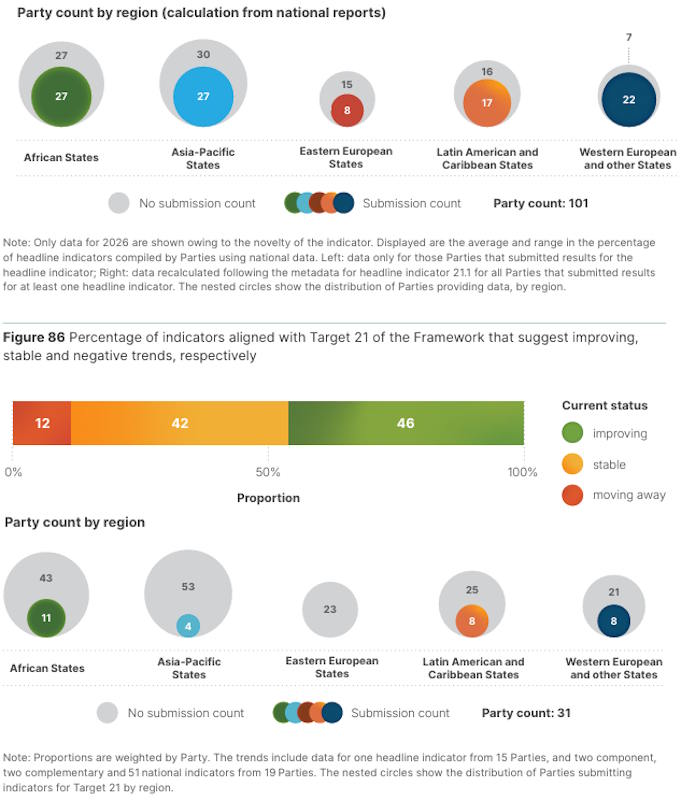
As for sustainable agriculture, an analysis of the national biodiversity plans cited in the source document finds that 97% include references to agroecology, but only 51% bring together all the elements necessary to transform these commitments into verifiable policies, such as objectives, indicators, institutional responsibilities and financing.
@UN
A significant gap: recognizing the importance of ecosystem-friendly agriculture does not yet equate to concretely supporting it.
Protecting biodiversity also means protecting those who take care of it
Meanwhile, the message that comes from the 56 experiences recounted in Local Biodiversity Outlooks 3 it is clear: nature conservation does not only depend on the establishment of new protected areas, but also on the people who live there, on their knowledge and on the possibility of continuing to manage the territories responsibly.
Initiatives by communities in Nagaland, farmers in the Sundarbans and ecologists in the Nilgiris demonstrate that the protection of biodiversity can go hand in hand with food security, climate adaptation and the well-being of populations, but without the recognition of land rights, adequate funding and effective participation in decisions, many of these experiences risk remaining isolated.
On this aspect, COP17 will be called to measure the distance between declarations and results: it is not enough to recognize that indigenous peoples are among the main custodians of biodiversity. We need to create the conditions so that they can continue to be so.
Sources: Local Biodiversity Outlooks 3 / Convention on Biological Diversity – Global Review Report 2026
