
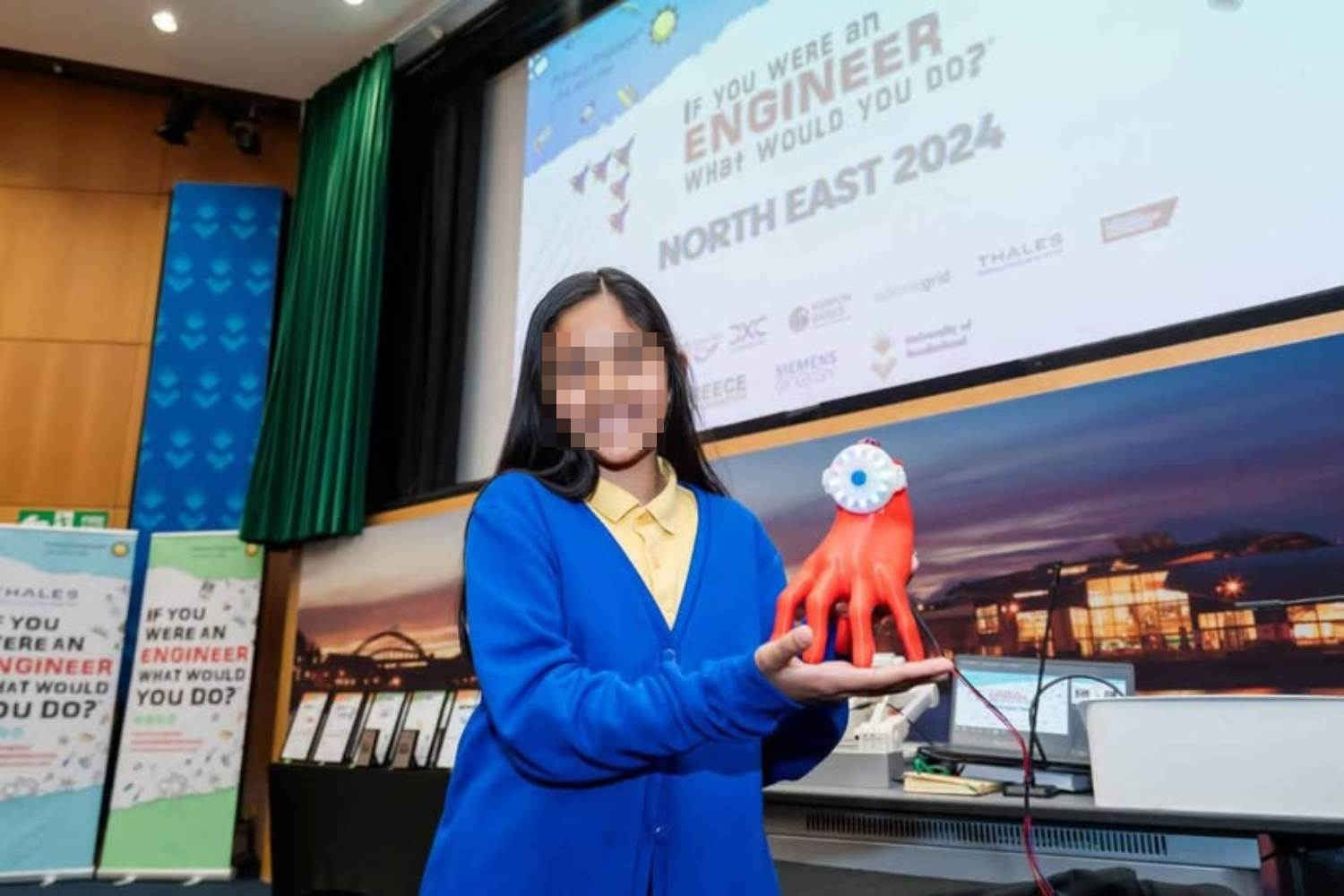
At just eight years old, Zoeya Khan He has shown that innovation has no age. While many children of his age spend time between games and fantasy, she has created a device capable of Improve the school life of many of his neurodicjecting companions.
His invention, a luminous braceletallows children with autism, adhd and dyslexia of communicate in a simple and immediate waywithout having to resort to words. The idea was born when Zoeya participated in the competition Primary Engineer Macrobert Medalaimed at young students from the United Kingdom. The challenge was clear: “If you were an engineer, what would you invent?“.
By observing the difficulties of some of his companions in expressing his emotions in the classroom, the girl has thought of a practical and intuitive system to help them. So he imagined a bracelet that, through a color code, allows students to communicate their emotional state to teachers and peers.
How the bracelet works
The device works in a very simple way. The bracelet is equipped with a white dial with colored lights, operated with a button. Each color represents an emotion: red to indicate frustration, green to report concentration, blue to express the need for a break.
This system allows teachers to immediately understand the mood of students without these having to strive to verify their emotions. An idea as simple as it is brilliant, which could facilitate school inclusion and improve communication between students and teachers.
Thanks to the support of the University of Sunderland, Zoeya’s project took shape becoming a working prototype. During the award ceremony of the competition, the bracelet aroused great enthusiasm, ranking In third place among the over 71,000 ideas presented.
The success of the device opened New perspectives for inclusive education: teachers already imagine advanced versions of the bracelet, perhaps with further features to meet the needs of an even greater number of students.
Zoeya’s invention shows how an idea born from observation and empathy can make the difference in the life of many people. His bracelet is not only a technological device, but a symbol of hope for a more inclusive future, where every child can feel including and listened to.
