
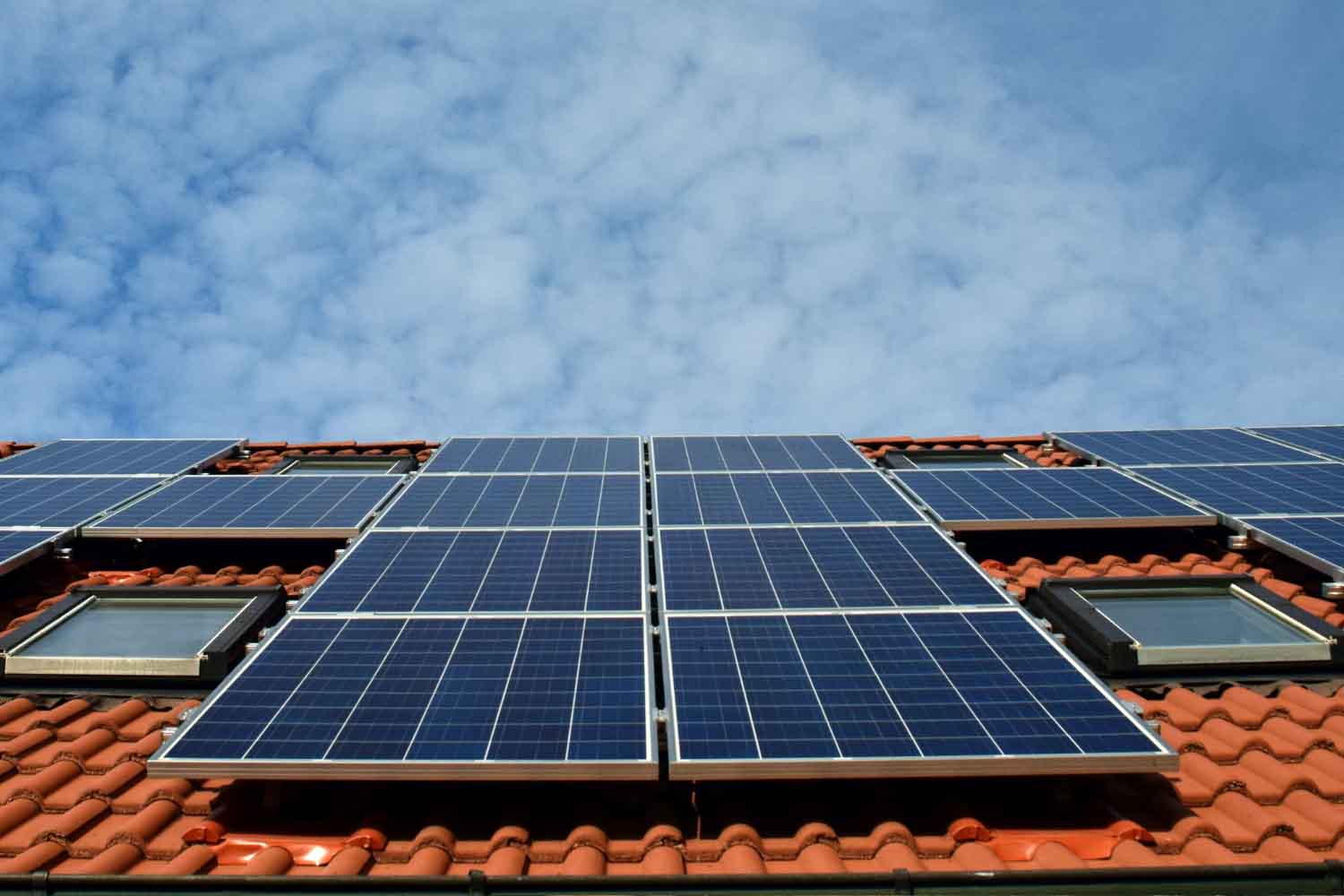
Twenty-seven letters of formal notice, one for each country of the European Union. The green homes directive had to be implemented by 29 May 2026; on July 15 the Commission found that no one had completed the work. For once Italy is not alone: the entire class missed the delivery. Rome, however, comes to the appeal already with two notes in the register.
The new infringement procedure opened by the European Commission concerns the failure to fully transpose Directive 2024/1275 on the energy performance of buildings. For Italy it is the third dispute linked to the same text: the other two concern the national restructuring plan, never delivered within the deadline, and the incentives for autonomous boilers powered only by fossil fuels. Three distinct procedures. The condominium, at least the bureaucratic one, is already well underway.
Three letters for the same directive
The first deadline had come more than a year before the general deadline. From January 1, 2025, states should have stopped financial incentives for the installation of new autonomous boilers powered exclusively by fossil fuels. The following November, Brussels concluded that Italy, Estonia and Hungary had not fully implemented the provision, or had not sufficiently explained the measures adopted. Thus began the first letter of formal notice.
The second file was opened in March 2026. By 31 December 2025, each State had to present a first version of the National Building Renovation Plan: a snapshot of the real estate assets accompanied by objectives, interventions, costs and possible sources of financing until 2050. Italy did not deliver it on time, together with eighteen other countries.
In the meantime, some latecomers have caught up. On 14 July, the Commission published the first evaluation of sixteen comprehensive drafts submitted by fifteen states and Wallonia between December 2025 and May 2026: Austria, Bulgaria, Cyprus, Germany, Denmark, Spain, Finland, France, Croatia, Lithuania, the Netherlands, Portugal, Romania, Sweden, Slovenia and Wallonia. Italy does not appear. The definitive plan must be delivered by 31 December 2026, but the Italian draft continues not to be included among those published by the Commission.
The general deadline for incorporating all the other provisions of the directive into national law expired on 29 May. None of the Twenty-Seven have notified full transposition. Hence a letter of formal notice for each country of the Union.
No fines on the intercom
The letter of formal notice is the first formal step in the infringement procedure. Governments have two months to respond, complete transposition and communicate the approved rules. If the explanations do not convince Brussels, a reasoned opinion may arrive; afterwards, the case can be brought before the Court of Justice of the European Union, even with the request for financial sanctions. Many procedures are closed before the court, when the State fixes what is missing.
For home owners there is no fine, no sudden obligation to open a construction site and no European official will knock to check the thermal insulation. The procedure concerns the State and its delay in transforming the directive into national standards.
Precisely these rules will have to clarify the part that really interests families, condominium administrators and businesses: which buildings to redevelop, with what timescales, what incentives and what protections for those who cannot afford the expense. As long as transposition remains incomplete, many fears and few rules circulate. A perfect environment for announcements, real estate alarms and photomontages of houses chased by the European bulldozer.
No mandatory classes for each house
The directive does not require every home to automatically reach a certain energy class by 2030 and does not introduce a generalized European ban on selling or renting properties in class F or G. It establishes overall objectives for the residential stock and leaves the task of choosing buildings, tools and measures to individual governments.
For homes, average primary energy consumption will have to decrease by 16% by 2030 and by 20-22% by 2035 compared to 2020. At least 55% of the reduction will have to come from works carried out in the band consisting of the 43% of buildings with the worst performance. This means concentrating interventions on the houses that consume the most, without transforming every single energy certificate into an individual sentence.
For non-residential buildings, however, minimum national thresholds are introduced which are intended to involve 16% of the worst properties by 2030 and 26% by 2033. The directive also contains rules for new zero-emission buildings, solar, electric mobility, renovation passports, energy certificates and one-stop shops which should accompany citizens and businesses through technicians, estimates and financing.
The national plan serves to bring all this together. It must contain a mapping of residential and non-residential buildings, a roadmap with objectives for 2030, 2040 and 2050, the planned policies and an estimate of the necessary investments. The draft must also go through a public consultation. It is the document that should explain who does what and, above all, with what money. Exactly what is still missing.
Almost one in two certified homes is still in class F or G
The Italian delay falls on a building stock that does not shine for youth or energetic sobriety. According to the ENEA report on energy certification, based on over 1.2 million certificates issued in 2024, 45.3% of certified residential properties still fell into classes F and G. 76% of the assets analyzed had been built before 1991. The worst classes have decreased compared to the previous year, while the most efficient ones have grown: the movement exists, the road too. It is the speed that recalls that of certain condominium meetings.
Overall, 75% of European buildings have insufficient energy performance and the annual renovation rate stands at around 1%. The directive was created to accelerate this pace and reduce consumption, bills and dependence on fossil fuels. To do this, legible rules, programming and funding are needed, especially for vulnerable families and tenants, who the European text expressly asks to protect.
Brussels has given two months to respond, but for Italy the work goes beyond the last letter: the new procedure is added to the two already started on the draft national plan and on incentives for fossil boilers. All Twenty-Seven missed the general deadline. Rome has yet to explain which buildings it intends to redevelop, with what money and what protections for those who cannot afford the work. The houses are still waiting for the plan; the letters from Brussels, however, are already three.
