
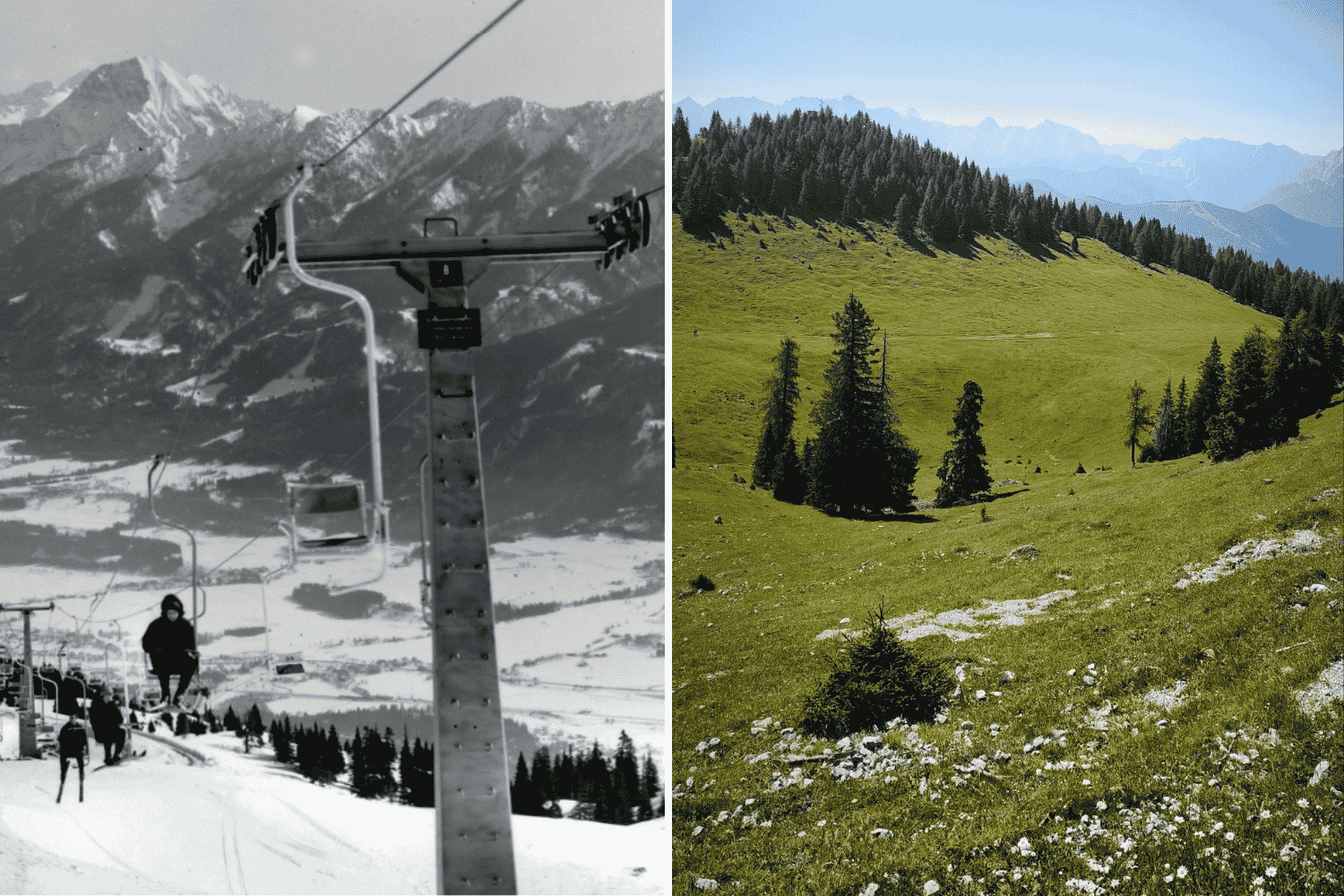
There are places that change their destiny long before the rest of the world realizes how important that choice was. Mount Dobratsch, in the Austrian region of Carinthia, is one of these. Over twenty years ago it was decided not to expand the ski area here, also giving up artificial snow to protect a delicate hydrogeological system on which a large part of Villach’s drinking water depends. In the following years the ski resorts were dismantled – and even sold in Georgia – while the Mount Dobratsch Nature Park was born, the first in Carinthia. A choice that today, in an era marked by climate change, continues to offer ideas on how tourism and nature can coexist.
The choice that changed the fate of Dobratsch
© Historical archives of the Bergmannischer Kulturverein, Bad Bleiberg
At the end of the 1990s, Dobratsch seemed destined to follow the path of many other Alpine resorts. On the one hand there was the prospect of expanding the ski area and introducing artificial snow to make the tourist offer more competitive and guarantee longer winter seasons. On the other, however, there was a mountain that held a resource that was impossible to replace: water.
More than 80% of Villach’s drinking water comes from this karst massif, as well as part of the water supply of the nearby municipality of Bad Bleiberg. Any intervention would therefore have had consequences far beyond tourism, touching a fundamental resource for thousands of people. The question thus changed perspective: it was no longer just a question of understanding how to make the mountain more competitive, but what future was compatible with its natural balance.
It was at that moment that something unusual happened. While the “Save the Dobratsch” civic movement was taking shape, the institutions also began to recognize the strategic value of that territory. The Natural Park itself describes this phase as the meeting between bottom-up initiatives and a political vision in favor of mountain development without new ski facilities. Not a clash between opposing factions, but a shared path that involved citizens, administrations, technicians and volunteers in the construction of a common project. That decision would change the fate of Dobratsch.
From a ski area to a new way of experiencing the mountains
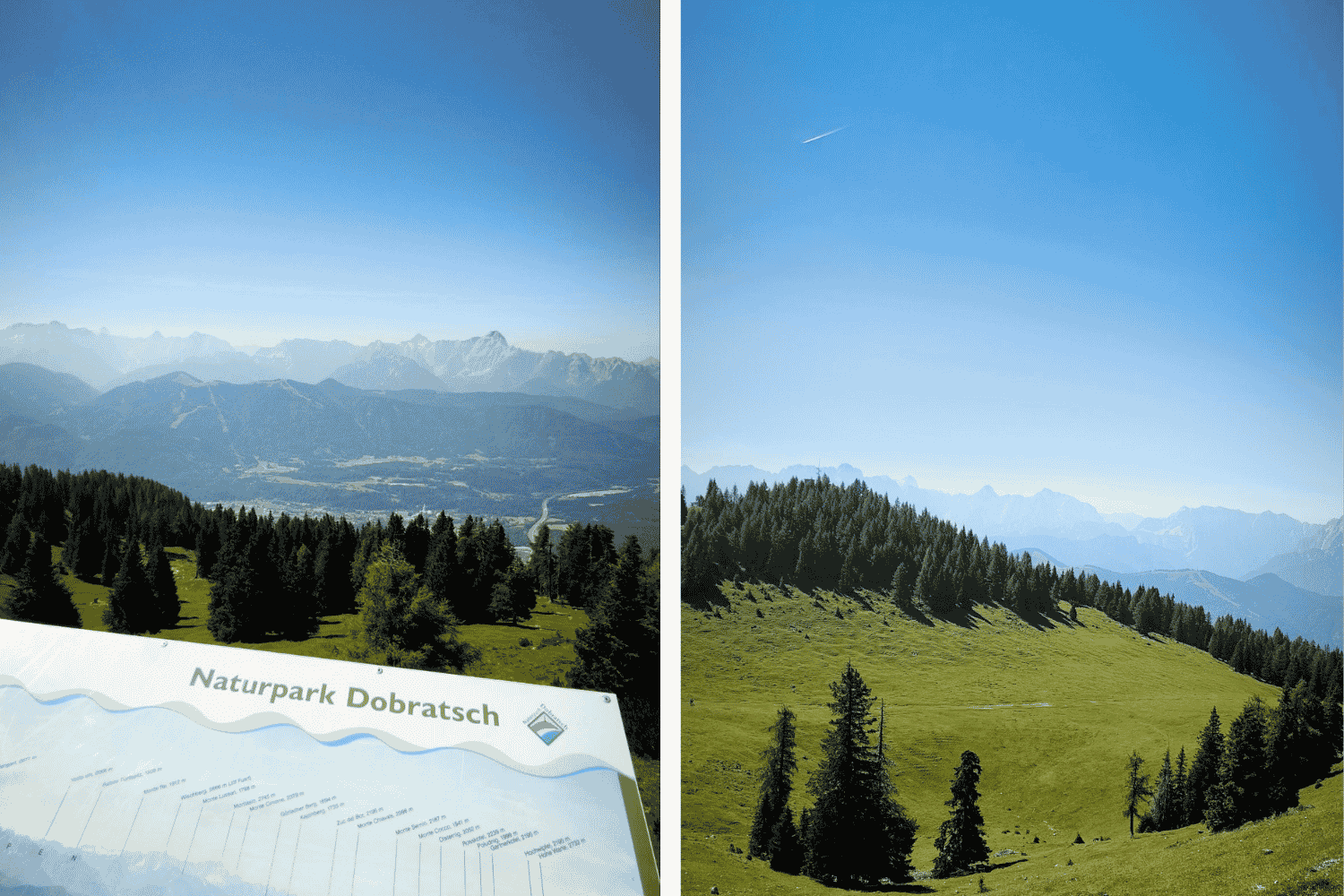
©GreenMe | Dobratsch Mountain Nature Park
In the following years the expansion project was definitively shelved. The ski resorts, built starting in the 1960s, were gradually dismantled and sold in Georgia. In their place came no new infrastructure, but a different idea of development.
In 2002 the Dobratsch became Carinthia’s first nature park. The mountain was not transformed into a place to be preserved by keeping it away from people, but into a space where nature protection, environmental education, scientific research, local development and use of the territory could coexist. Even today the Park is the result of a collaboration between the four municipalities of the area, the Land of Carinthia, experts, associations and local operators, keeping alive the participatory spirit from which everything was born.
Rather than giving up on development, Dobratsch has chosen to redefine it.
Today the Dobratsch is a mountain to experience
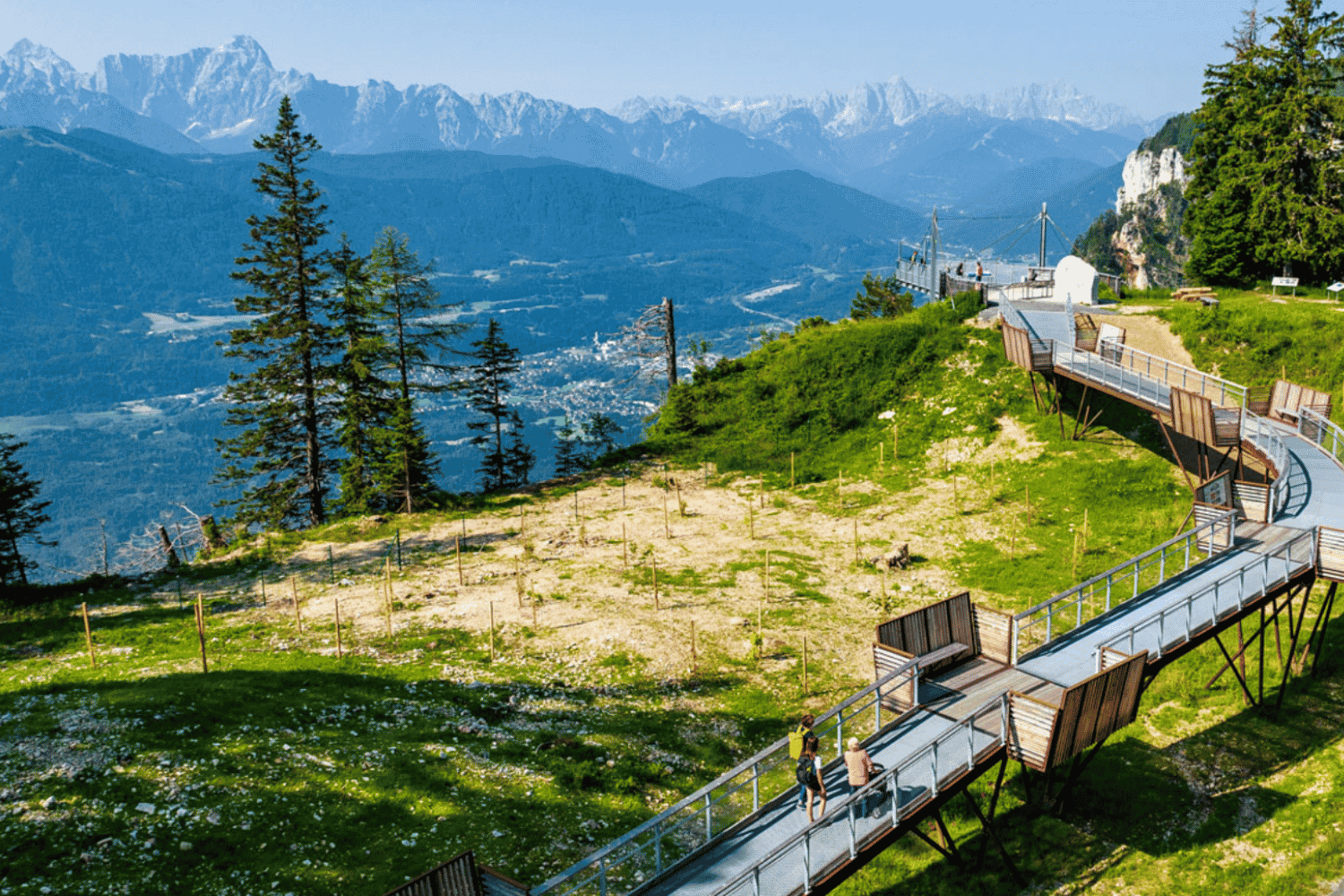
© Naturpark Dobratsch | Skywalk
The transformation of the Dobratsch has not distanced people from the mountains, but has changed the way they experience it. Today it can be reached via the panoramic Villacher Alpenstraße, from which paths for all levels of experience start. The Skywalk suspended on the Rote Wand offers spectacular views of the Alps and the Villach valley and, together with some of the main routes of the Park, has been designed to also be accessible to people with reduced mobility. The Alpine Garden, guided excursions and environmental education activities allow you to learn more about the nature of this area, making the mountain experience accessible to every person.
At the foot of the Dobratsch, in the heart of the Bad Bleiberg valley, there is another peculiarity of the area: the Climatic Gallery, created from an ancient mine, where a natural microclimate characterized by constant temperature, high humidity and particularly pure air has been used for years as a therapeutic support for some respiratory pathologies.
Not even winter has erased the relationship with the mountains. Today the Dobratsch is a destination for those who practice ski mountaineering, snowshoeing and snow excursions or simply seek the silence of an environment that has remained close to its natural rhythms. Rather than giving up tourism, this mountain has chosen to transform it.
A story that continues to speak to the present
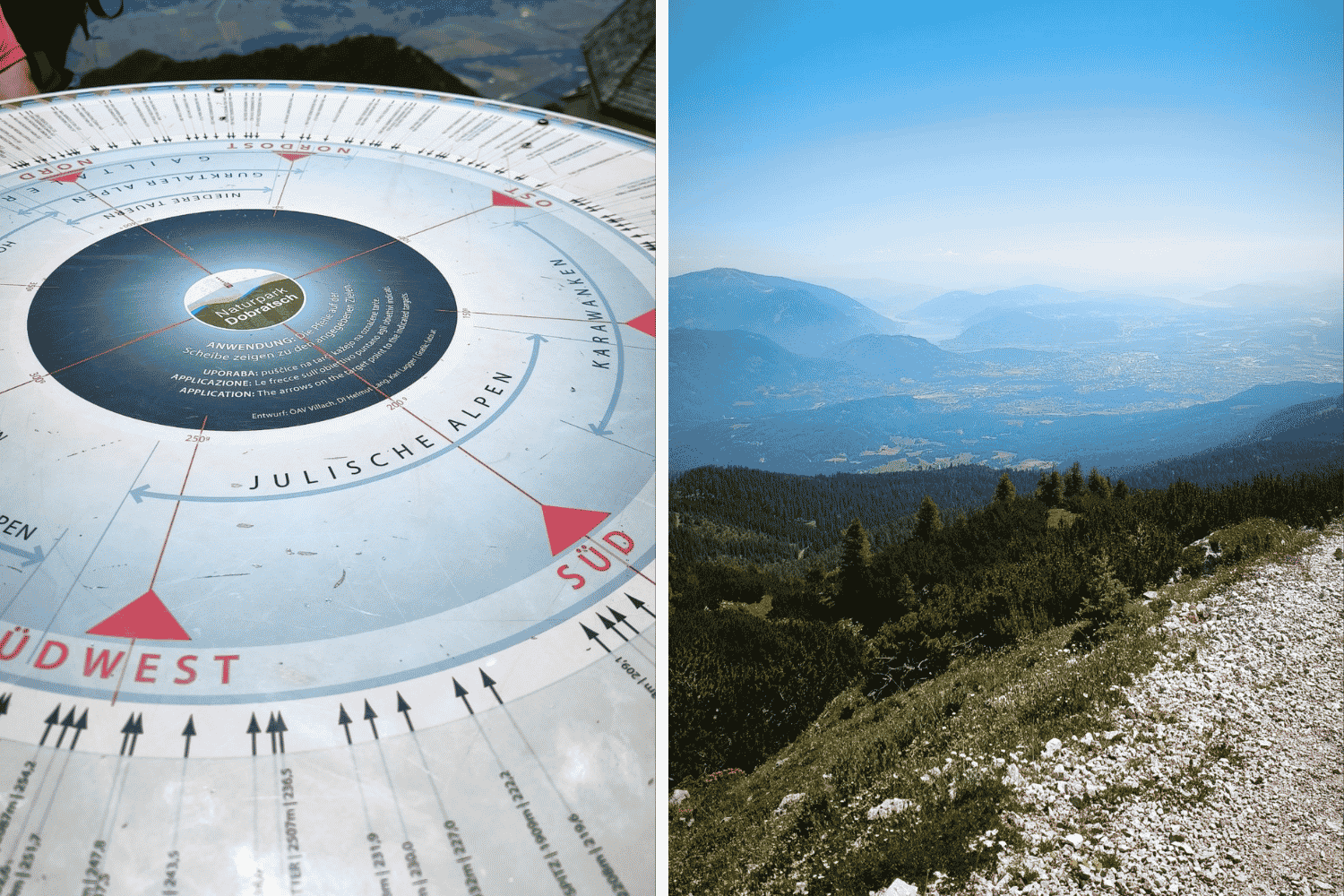
©GreenMe | Dobratsch Mountain Nature Park
When Dobratsch embarked on this path, climate change did not yet occupy the center of public debate. Yet that choice seems to dialogue with many of the reflections that cross the world of research today. A study published in the journal Mountain Research and Development shows how the quality of ecosystems influences the visitor experience and the value they attribute to mountain destinations. Although it concerns another area of the Austrian Alps, it offers an interesting confirmation of an increasingly relevant principle: conserving the natural heritage also means taking care of the future of the territories.
Of course, Dobratsch does not offer a universal recipe. Each territory has its own history, its own economy and different environmental characteristics. But this experience shows that development does not necessarily coincide with the expansion of infrastructure. Sometimes it comes from the ability to recognize the value of what makes a place unique.
Good ideas don’t always need to be new. Sometimes you just need to go back and talk about the ones that, over time, have proven to work. On the Dobratsch that choice protected a fundamental resource such as water, gave life to Carinthia’s first Nature Park and continues to welcome thousands of visitors today. Not because the mountain has been transformed into something different, but because it has managed to remain faithful to its nature.
