
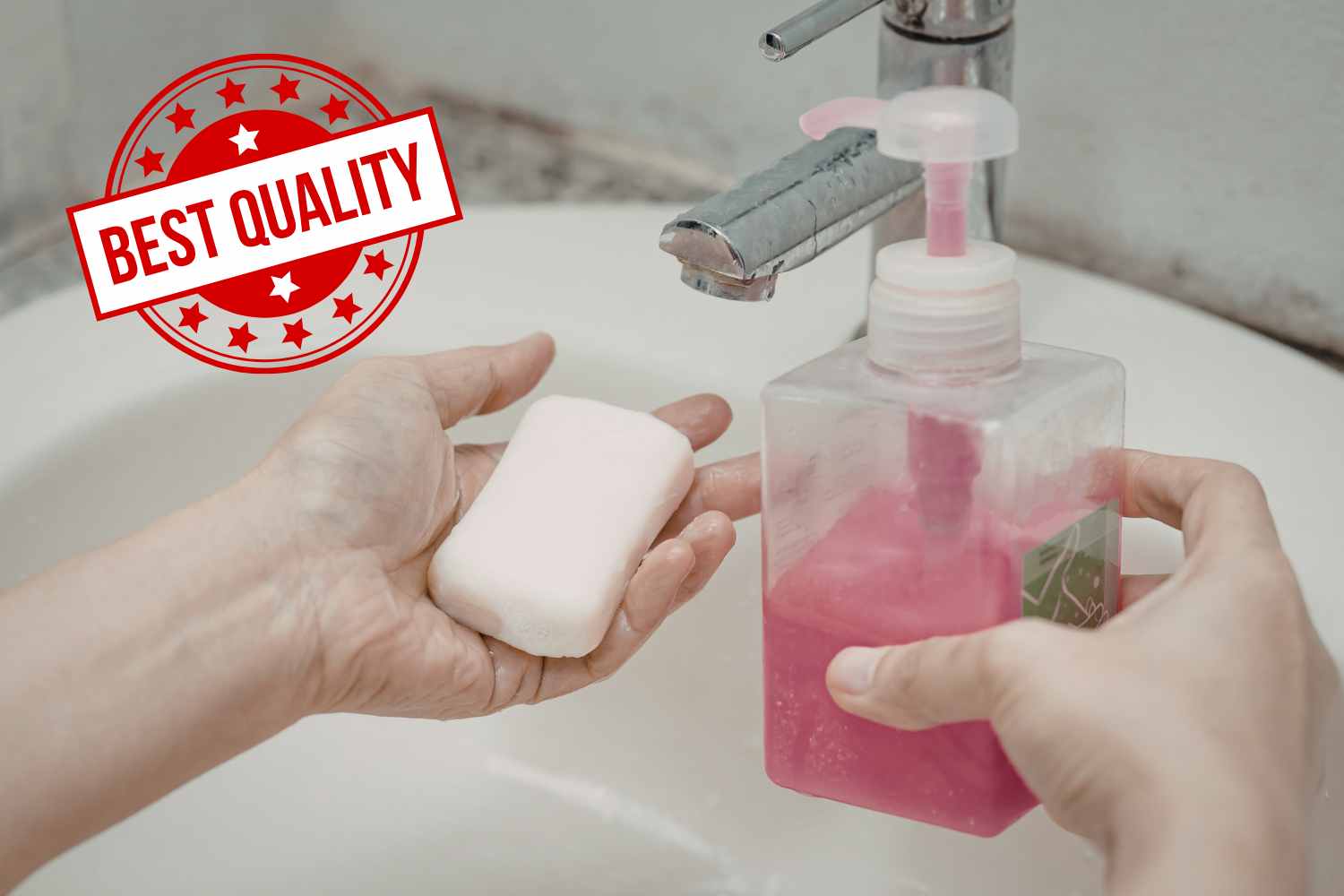
65 types of soap, of which 41 liquids and 24 bar soaps, sieved starting from the list of ingredients printed on the label. It is the method with which Altroconsumo tried to answer an apparently banal question, namely which is the best between liquid and solid soap. A question that actually hides two distinct issues: how much a product weighs on the environment and how much, albeit to a lesser extent, it can affect the skin of those who use it.
The final score comes from an algorithm that assigns 70% of the weight to the environmental impact, because the soap ends up in the drain anyway, and 30% to the possible health risks, considered more contained since it is a product that remains on the skin for a few seconds. The evaluation includes the official European classifications on substances of very high concern (SVHC), endocrine disruptors, persistent and bioaccumulative substances, allergens and ECHA classification.
The soap bars that convince the most
Among the award-winning formulations, two soap bars obtained the title of Best Composition. Carrefour Soft Bio Delicate Soap, based on organic palm and coconut oils, does not contain perfume or allergens; the 100 g pack costs €0.99, an average price per kilo (€9.90). Winni’s Marseille Soap for Laundry and Personal Hygiene, on the other hand, is scented but still free of allergens, with palm and palm kernel vegetable fats: the largest format, 250 g and €1.85, brings the cost per kilo to €7.40.
The liquids that fare best
On the liquid soap front, Cien (Lidl) with lotus flower and chamomile extract stands out for its packaging made of 60% recycled plastic and a competitive price per liter (€2.50): scented, but without allergens or other problematic substances. Infasil Neutral Liquid Detergent follows the same pattern at a higher price per litre, €7.97.
Allergens, preservatives and microplastics: the items that weigh the most
The most delicate chapter concerns perfume allergens, namely linalool, limonene, benzyl alcohol and other compounds which Commission Regulation (EU) 2023/1545 has led to over 80 substances that must be mandatorily declared on the label. Only ten of the 65 products analyzed are free of them, the others contain an average of four, with a peak of 15 for Borotalco Perfumed Soap, which in fact closes the ranking for environmental impact.
In liquids the environmental score also discounts preservatives, necessary because the product contains water: Felce Azzurra, last in the ranking on this front, contains two from the thiazolinone family, methylchloroisothiazolinone And methylisothiazolinoneknown for their sensitizing potential. Microplastics, on the contrary, are missing from most of the products tested, and when they appear they mainly concern liquids. No endocrine disruptors, however, are among the ingredients analyzed.
Which one to choose?
There is no absolute winner, but two different logics: if you are looking for practicality and a product that can be shared within the family you will find the most convenient solution in liquid, if you want to reduce waste you should rely on bar soap, which does not require preservatives, uses less plastic and generally has simpler formulations. In both cases, reading the INCI before putting the product in the cart remains the most useful gesture.
To consult the complete ranking you can use the Altroconsumo comparator.
