
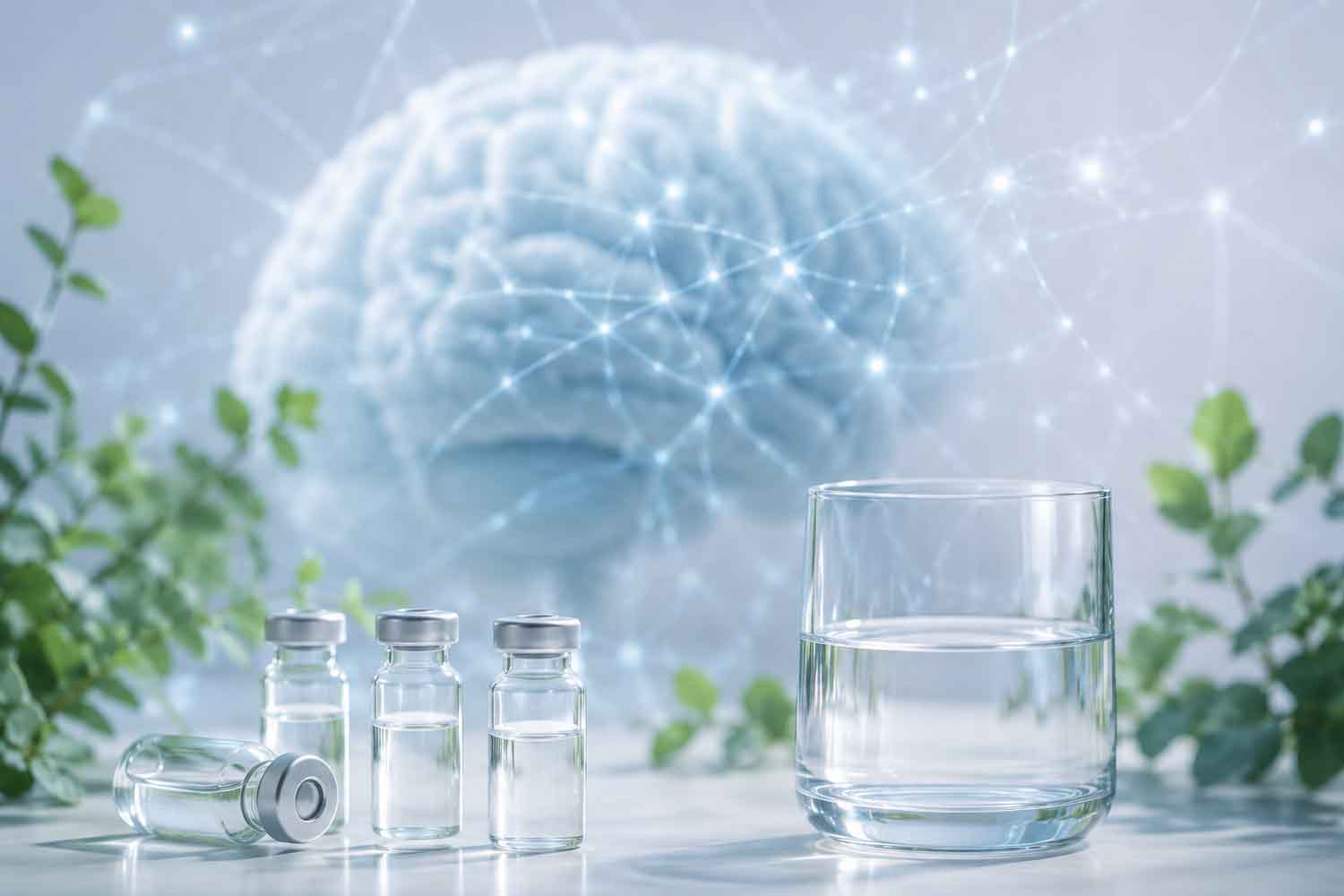
Lithium is best known as a mood-stabilizing drug. Yet, in very small quantities, it is also present in water and various foods. In recent years, interest in lithium supplements and the possible effects of microdoses on mood, memory and brain health has grown.
Above all, attention was rekindled by a study published in Naturewhich found lower levels of lithium in the brains of people with mild cognitive impairment or Alzheimer’s. In laboratory tests, restoring small amounts has produced promising results on some processes involved in the disease.
Research on microdoses is still in its infancy, and available supplements should not be confused with lithium-based medications. So let’s see what they contain, what they are for and what benefits have been studied so far.
Lithium supplements: what they contain
Lithium is an element naturally present in soil, drinking water and numerous foods. Among the preparations available in Italy there are liquid formulations based on lithium gluconate, marketed as oligotherapy products. The word “trace element” indicates a substance present or used in extremely small quantities. It does not automatically mean that there is a nutritional deficiency that needs to be compensated for.
The European Food Safety Authority explained that no dietary reference values have been established for lithium and that the available evidence does not allow it to be classified as an essential nutrient for humans. There is therefore no official daily requirement, recommended dose or test capable of diagnosing a presumed dietary lithium deficiency.
What are lithium supplements for?
Very low-dose lithium supplements are primarily used to support mental well-being during periods of stress, irritability, or mood swings. Other proposed uses concern memory, concentration and mental clarity. The interest also arises from the long clinical experience gained with pharmaceutical lithium, one of the most studied mood stabilizers. Its effectiveness is documented above all in the treatment and prevention of episodes of bipolar disorder.
The microdoses present in supplements belong to a very different order of magnitude. The effects demonstrated for the drug cannot be transferred directly to ampoule preparations. At a cellular level, lithium intervenes in various processes linked to communication between neurons, the response to stress and the survival of nerve cells. The research aims to understand whether some of these activities can also occur with much lower exposures.
Lithium supplements and mood: what the studies suggest
In 2025, research conducted on 211 people taking lithium supplements collected several testimonies of perceived improvements in anxiety, mood and cognitive functions. It was a survey based on user experiences, without a placebo and without a control group. The results describe what people reported and help understand why these supplements are chosen.
Another area concerns lithium naturally present in drinking water. A meta-analysis of 15 ecological studies found an association between higher concentrations in water and lower suicide rates, with variable results across the areas examined.
In 2024, a pre-registered study of 1,043 Swiss municipalities found no significant association. These studies compare entire populations and do not know the precise exposure of each individual. They provide a path to explore further, without yet offering guidance on personal hiring.
Lithium supplements and memory: why they are of interest to research
Attention to microdoses increased after a study published in Nature in 2025. Analyzing post-mortem human brain tissue, researchers observed lower lithium levels in people with mild cognitive impairment and Alzheimer’s disease. The main analysis of cortical levels included 177 subjects without cognitive deficits, 66 with mild impairment and 105 with Alzheimer’s. The hypothesis has also emerged that beta-amyloid plaques may retain part of the lithium present in the brain, reducing its availability.
During laboratory tests, the experimental reduction of lithium promoted accumulation of beta-amyloid, alterations of the tau protein, inflammation and memory loss. The administration of very low quantities limited several of these phenomena. Human tissue data show an association and do not allow us to establish whether lithium reduction contributes to the disease or is a consequence of it. The results obtained in the laboratory will also need to be confirmed through clinical trials.
A trial published in 2026 followed 80 adults with mild cognitive impairment for two years, assigning them to low-dose lithium carbonate or a placebo. None of the six key findings reached the expected statistical threshold.
Lithium supplements: what is the dosage
For lithium supplements there is no daily dose recommended by nutritional authorities. In gluconate-based liquid formulations the quantities can be expressed as the weight of the complete compound or as elemental lithium.
A vial containing 4.070 milligrams of 3.37% lithium gluconate, for example, provides 0.137 milligrams of elemental lithium. Three vials reach 0.411 milligrams.
Reading just the largest number can make the dosage seem almost thirty times higher than it actually is. To compare two formulations you need to look for the amount of elemental lithium and check how many units make up the indicated daily dose.
Lithium supplements and drugs: what are the differences
A 300 milligram lithium carbonate pharmaceutical tablet contains approximately 56 milligrams of elemental lithium. A single tablet therefore provides a quantity hundreds of times higher than that present in a very low dosage vial.
Lithium used as a drug requires a prescription, measurement of blood levels and periodic checks of renal and thyroid function, as indicated in the summary of product characteristics published by AIFA.
The measurement of lithium in the blood serves to maintain therapy within an effective and safe range. It is not a test that can be used to decide whether a healthy person needs to take a supplement.
Lithium supplements: side effects and interactions
Human studies on microdoses taken for extended periods are still limited. Fatigue, gastrointestinal disorders, thirst, increased urination and tremor have been reported among users of supplements, without it being always possible to establish the relationship with the quantities taken.
Lithium is eliminated primarily through the kidneys. Dehydration, fever, vomiting, diarrhea and major changes in salt intake can modify salt elimination.
Known interactions mainly concern pharmacological dosages. According to official information on lithium medicines, some diuretics, anti-inflammatories such as ibuprofen and naproxen, ACE inhibitors and angiotensin receptor antagonists can increase its levels.
The relevance of these interactions to a few tenths of a milligram per day has not been precisely defined. However, it is advisable to ask your doctor for advice in the presence of kidney, thyroid or cardiovascular diseases, during pregnancy and breastfeeding or when taking medications continuously. Those who are already taking lithium therapy should avoid adding other sources of the same element on their own.
Lithium supplements in Italy: what the legislation says
Lithium is not among the minerals listed in the annexes of the European Food Supplements Directive. However, on the Italian market there are very low dosage preparations marketed as oligotherapy products.
The situation requires carefully checking the manufacturer, complete composition, quantity of elemental lithium, label in Italian and origin of the product. Notification of a supplement is also not prior authorization. The Ministry of Health specifies that inclusion in the register does not constitute consent to marketing or a certificate of conformity.
Where lithium is naturally found
Small quantities of lithium are present in drinking water and numerous foods. An analysis of 1,071 food and drink samples found higher average values in some leafy vegetables, bulbous vegetables, fruits and legumes.
Other research has measured it in grains, potatoes, tomatoes and cabbage. The quantities change based on the soil, the water used and the production area, making the rankings of the “richest in lithium” foods unreliable.
Research on microdoses is growing, especially in the fields of mood and brain aging. There is still insufficient clinical evidence to attribute to supplements the same effects observed with the drug or during laboratory tests. The dose can be tiny. Open questions, decidedly less so.
Offer
Promoligo 08 – Lithium – Food Supplement, Essential Trace Elements – Lithium, for mental well-being – gluten-free – 20 vials of 2 ml
