
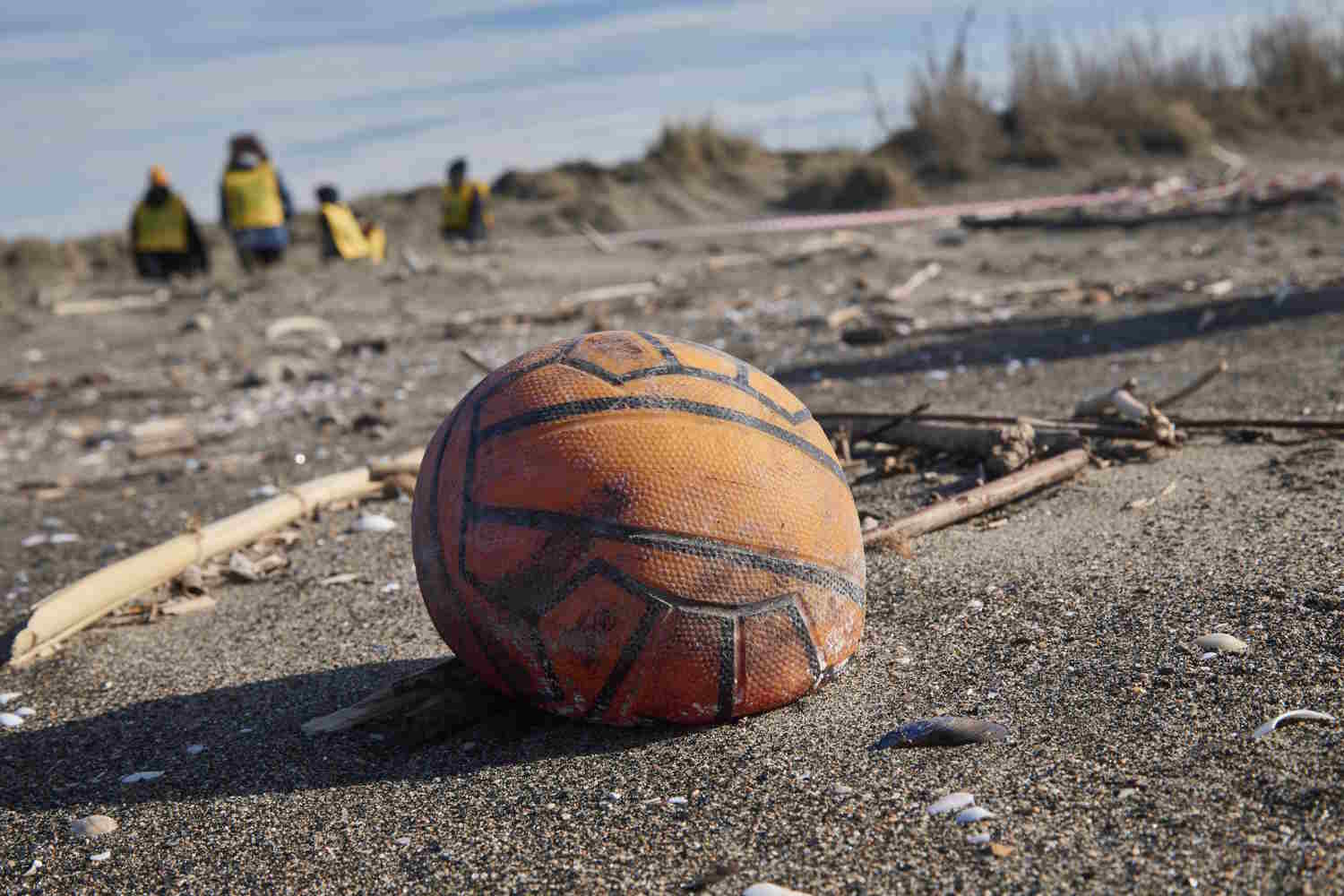
“Clean beaches? You pinch you“: It is with this slogan that on the weekend from 4 to 6 April, in view of the National Sea Day, the 35th edition of” Beaches and clean seabed “will start, the Legambiente campaign dedicated to monitoring and to the cleaning of waste abandoned along the coasts of the peninsula.
Will be more than 90 initiatives throughout Italy organized in 17 Regions (not only coastal but inland, due to the presence of rivers and lakes) from Legambiente and 78 of his circles and regionalwhich fall within the actions that contribute to the EU mission “Restore Our Ocean and Waters”For 2030.
Beach Litter 2025
That of the Marine Litter remains a great and very serious threat, so much so that – according to UNEP – globally, Every year between 19 and 23 million tons of plastic waste pollute lakes, rivers and seaswhile emissions will triple by 2040.
A recent project report MedbiolitterFurthermore, it reports 22 species at risk between marine megafauna, including cetaceans, seals, turtles, sharks, breeds, tuna and sword fish. Among the major impacts recorded, the mortality from direct ingestion of plastics and microplastics and alterations on the reproductive cycle.
From the new investigation Beach Litter 2025that Legambiente conducted on 63 beaches in 13 Regionsit emerged that, on a total area of 196,890 square meters, they were 56,168 the waste collected And cataloged. An average of 892 waste per 100 linear meters.
Compared to the 2024 edition, there is a worsening of “Degree of cleaning” beaches, calculated for the second year using the Clean Coast Index (CCI), an indicator used at an international level that establishes the level of cleaning of a beach on the basis of the density of the waste in the monitored sample areas: 28% of the 63 beaches monitored appears to have a CCI corresponding to a judgment “Dirty beach” or “very dirty” (in 2024 the value of the two categories had been 6.6%).
Compared to 2024 the “very clean” beachespassing through From 42% to 27%and the “Clean” beaches, from 24.2% al 14%.
There plastic confirms the main antagonist of the beaches: represents 77.9% of the objects found on all 63 sampled beaches (43,776 on 56,168 total). The glass/ceramic objects follow with 8.3%, 4.3% paper and cardboard, 3.6% metals and 2.4% wood. Returning to the plastic category, among the “observed special “ the 10 disposable plastic products and networks and fishing tools and aquaculture That, Three years after their ban on the Sup Directive (Single Use Plastics)still represent the 40.5% of the total monitored waste.
They continue to “depopulate” cigarette butts: The 7.5% of the totalan average of 7 every 10 linear meters of the beach. Since 2014 (first year of monitoring of Beach Litter) have been monitored 46,923 unitsout of a total of 623 transepts, 9.4% of all waste monitored in the same years e An average of 75 butts per 100 linear meters of beach. Another enemy attested for the beaches are the Cotton Fioc in plastic, the 5.6% of the general classification, which have been banned in Italy since 2019.
Top ten of waste on the beaches
The 61% of the waste collected and cataloged is represented by only 10 types of objects (on the 180 total categories). In addition to the cigarette butts (in third position) and Cotton Fioc (in fifth), the 13% (7.305 out of 56,168) is represented by Plastic pieces between 2.5 and 50 cm of greatness, found in 56 of the 63 beaches monitored; follow Plastic caps and lids (4,612, 8.2% of the total) found in 62 transepts, The pieces of polystyrene between 2.5 and 50 cm (3,886, 6.9%) found in 49 beaches, Wet wipes (2,619, 4.7%) in 25 beaches, building material (2,381, the 4.2%) in 47 beaches; Plastic drink bottles and containersfound in 53 beaches (2,066, 3.7% of the total); Enclosures, envelopes and bags handles (2,046, the 3.6%), found on 44 transepts; Finally, i pieces and fragments of glass and ceramicfound on 21 beaches (1,821, the 3,2%).
Entering Specifically of the total waste found on the beach in relation to only 10 items included in the SUP:
