
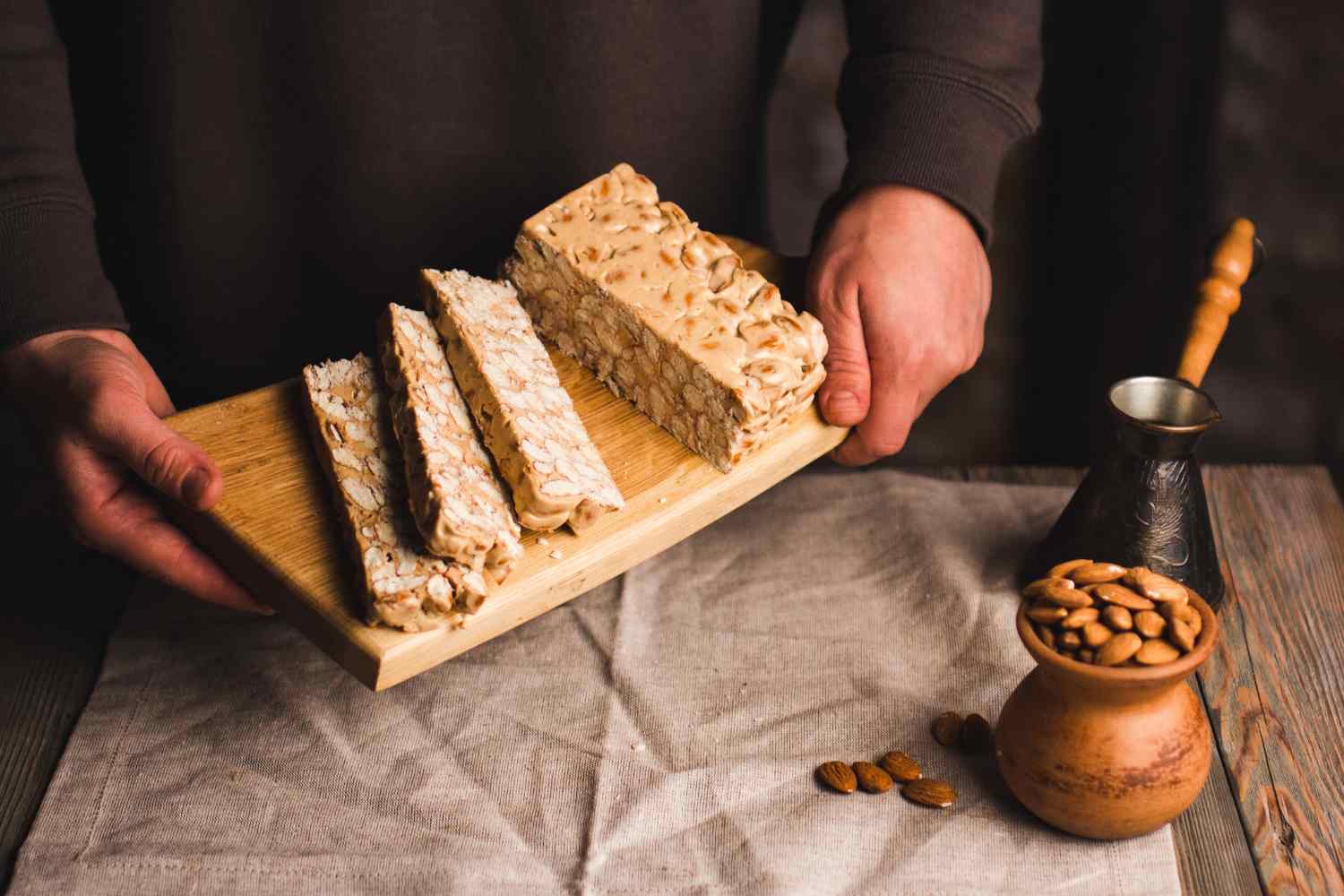
The Christmas lights are starting to illuminate the streets, the shop windows are filled with sparkling decorations and the houses are already breathing a festive air. As Christmas approaches, it’s time to think about the desserts that will make these days even more special: panettone, pandoro and, of course, nougat.
The latter, with its crunchy or soft consistency and the intense flavor of honey and dried fruit, is an unmissable presence on our tables during the holidays.
Whether it is the classic white nougat with almonds, the one covered in dark chocolate, or the more elaborate variations with pistachios or hazelnuts, this ancient dessert continues to conquer adults and children alike. But precisely because it is a pleasure that we indulge in mainly during the holidays, it is important to know what we are eating: how many calories does it really contain? Which ingredients should be present (and which ones should be avoided)? And above all, is there a “right” portion that allows us to enjoy nougat without guilt?
To answer these questions and help you make more informed choices during your Christmas shopping, we asked the nutritionist Flavio Pettirossi for advice, who guided us through the world of nougat through calories, labels and practical advice so as not to give up the taste of the holidays while still keeping an eye on your figure and your health.
Here’s what he told us:
Nougat is a very caloric dessert, rich in sugars, saturated and monounsaturated fats, a 100g piece in fact provides around 500kcal. The classic nougat is also the least caloric, I am referring to the white nougat with almonds but there are many types and variations or with a chocolate coating, liqueur filling or covered with a thin sheet of dough. Obviously these variants are also higher in calories, around 600kcal.
When choosing, we always try to pay attention to quality by carefully reading the labels. In fact, the only ingredients present in the nougat should be egg white, honey, sugar and dried fruit such as almonds, pistachios, walnuts, hazelnuts.
We therefore avoid those nougats in which ingredients that are unrelated to the basic recipe appear on the label.
Alternatively, you can also try preparing the nougat yourself in different variations by following our recipes:
But how much should we eat? Is there an “ideal” portion to avoid gaining weight?
Considering that it is a Christmas dessert that is eaten 2-3 times a year, it is possible to indulge in variations but without exaggerating with the quantities, around 20-30g at the end of the meal and not associated with other desserts. Obviously the more dried fruit the better.
Who should avoid it?
Unfortunately nougat is not a dessert for everyone, in fact people with weight problems or diabetics should pay close attention as should people allergic to nuts.
