
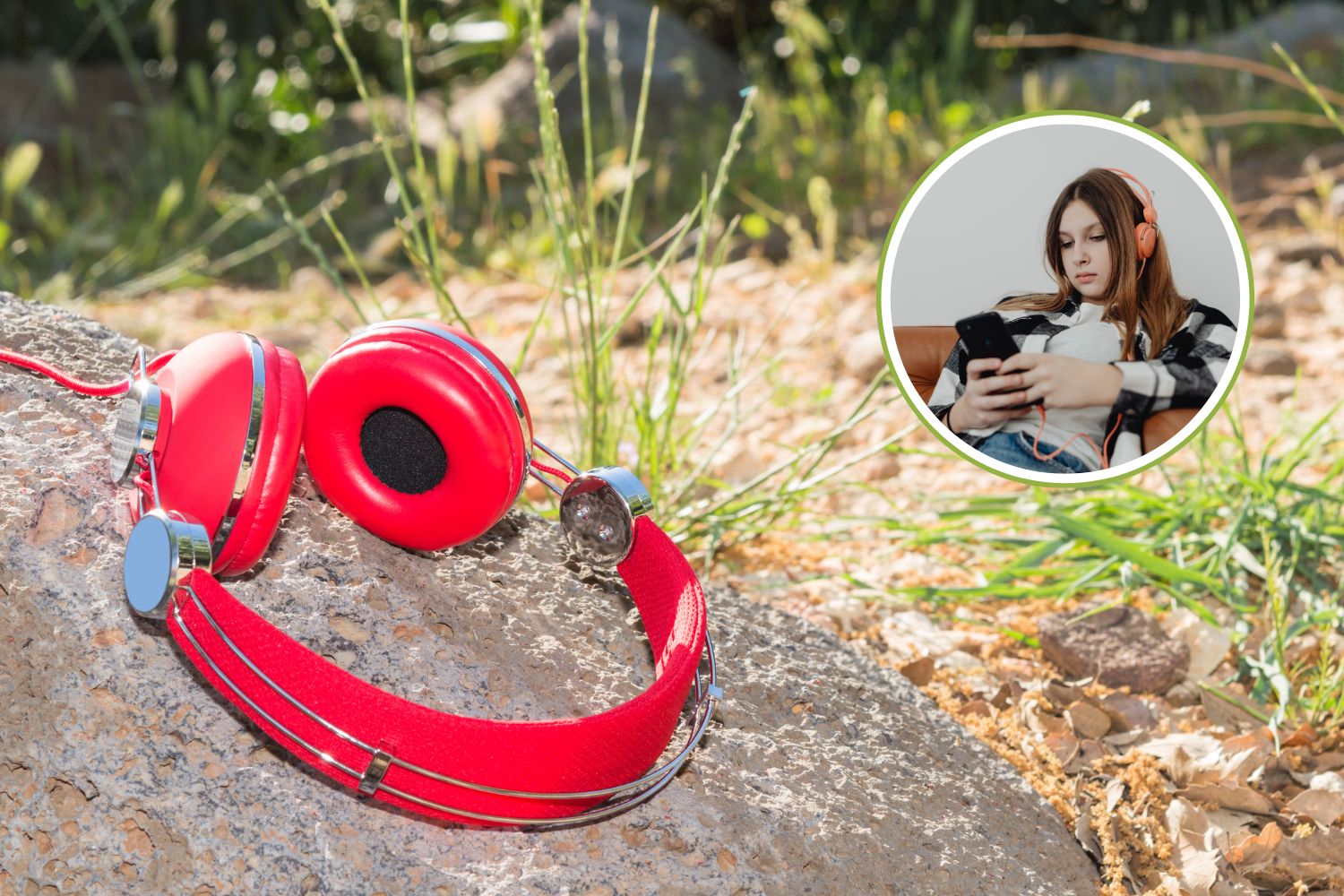
In many drawers there is still a couple badly rolled up, with the cable folded on itself and that absurd knot that seems to arise by itself during the night. For years we treated them like a wreck: old, uncomfortable, outdated, just good for a forgotten laptop or for an emergency call when the Bluetooth earphones were out of battery. Now those same wired headphones are returning to bags, to photos, to subways, to short videos, to the ears of girls and boys who have at most a vintage flea market relationship with the iPod.
The commercial data confirms that the return exists. According to Circana, after five years of decline and a $42 million decline in 2024, wired headphones grew 3% in 2025, accelerated in the second half of the year, and in the first six weeks of 2026 saw revenue rise 20%. In short, the cable has ceased to be just an aesthetic reference. He’s back to selling.
The cable shows up again
The curious thing is that the return comes precisely after the decade in which the market did everything to make the thread disappear. In 2016 Apple presented AirPods as an “effortless” listening experience, easy, fluid, frictionless, with quality audio and long battery life. In the same historical passage, with iPhone 7, the 3.5 mm jack disappeared from the daily lives of millions of people, replaced by adapters, Lightning, then USB-C, charging cases, chips, pairing, ecosystems.
It worked great for a while. True wireless earbuds have made it convenient to run, make phone calls, change devices, zone out on the train, cross town with the noise cancellation turned on. They turned two tiny objects into a small personal command center. Except that by adding functions, sensors, firmware, cases, batteries and notifications, they have lost a banal quality: obedience.
Wired headphones do something basic. You insert them, they go. No battery, no case, no Bluetooth pairing, no left earphone missing under the couch. This functional poverty, which until yesterday seemed like a limit, today almost sounds like a luxury. In a world where even a toothbrush can ask for updates, an object that works without demanding attention has a very real charm.
Price, battery, nerves
The first reason for the return is the most prosaic: they cost less. A decent pair of wired earphones costs much less than a good wireless model, even taking into account a USB-C adapter. For those who already live with subscriptions, price increases, increasingly expensive devices and products that need to be replaced every two or three years, paying little to listen to music, podcasts or recorded lessons has stopped seeming like a cheap choice. It’s simple common sense.
Then there is the duration. Bluetooth earbuds rely on tiny batteries that are often difficult to reach and replace. iFixit, which has been dismantling electronic devices for years to evaluate their repairability, gave the AirPods Pro 3 a repairability score of zero, reporting batteries stuck under layers of glue and a structure that makes the product, in fact, almost disposable when the battery degrades. The issue concerns the entire sector: when a battery is sealed, the life of the object is shortened and electronic waste arrives sooner. The Joint Research Center of the European Commission also reminds us that extending the life of products, making them repairable and allowing the replacement of components reduces the environmental impact.
Wired headphones have fewer parts, less chemistry, less hidden electronics. They can break too, of course. The wire gets ruined, the connector gives out, an earphone stops playing. But the structure remains simpler, more understandable, less sealed inside a shell that seems designed to say: when I get tired, throw me away.
On a technical level, the cable retains another advantage. Bluetooth has improved a lot, the codecs are more refined, active noise cancellation has changed the lives of travellers. Yet, for latency, stability and signal continuity, the physical connection remains a more direct solution. SoundGuys, in the comparison between wired and wireless headphones, underlines that wired headphones guarantee practically zero latency and interruption-free performance, qualities that are especially important for gaming, editing, recording, musical instruments and audio work.
A less clever object
The return of wired headphones also speaks to a more subtle tiredness. For years we were sold the idea that the best technology was the one that disappeared: no cables, no buttons, no friction, everything automatic. Except that the invisible technology still remains present. It listens, it connects, it updates, it switches between devices, sometimes it misses the mark just as you’re entering a meeting.
The cable makes the relationship visible. He says: I’m listening. It also says: I am connected to this phone, to this computer, to this precise source. In a way it limits. You have to carry the device with you, stay close to the socket, put up with the wire getting caught in the zip of your jacket. That bond, for some, has become pleasant again. It transforms listening into a more intentional, less liquid, less automatic gesture.
Something similar happens with vinyl records, with compact digital cameras, with old iPods recovered online. Gen Z takes objects from the recent past and uses them as language. Here the nostalgia of adults has something to do with it up to a certain point. Anyone in their twenties today was a child, or not even born, when the white cable of Apple earphones became a recognizable silhouette in iPod ads. For them that thread belongs to an imaginary seen later, reassembled, fished out as one does with a used jacket or a compact digital camera to take to a party.
And in fact the cable is visible. Wireless earbuds tend to disappear into the body, especially in photos. The wired headphones draw a line, cut the neck, go down the sweatshirt, end up in the pocket. They become an accessory. Some celebrities photographed with wired models have helped the phenomenon, from Zoë Kravitz to Lily-Rose Depp, within a small anti-shine aesthetic that works well because it costs little and seems little studied.
Wireless remains
The reappearance of the wire does not make Bluetooth earphones retire. More realistically, it tells us that many people are giving up looking for one good-for-all item. Noise canceling earphones remain very comfortable on the plane, at the gym, on the train, in a noisy house. Wired headphones come in handy on your computer, in your backpack, during a work session, on a long day where every less battery to check feels like a small victory.
The market, meanwhile, continues to run in the opposite direction. Apple has brought 3 sensors to the AirPods Pro to detect heart rate during training, integrating them with the Fitness app and other compatible apps. The AirPods Max 2 support lossless audio at 24 bit and 48 kHz when connected via USB-C, a sign that even within the wireless world the wire comes back through the side port when quality and low latency are needed. And according to recent rumors, Apple is also working on AirPods with small cameras designed to give Siri information about the context around the user.
The future of earphones, therefore, seems to be bifurcating. On the one hand there are increasingly intelligent devices, full of sensors, translation, health, artificial intelligence, spatial audio, functions that transform the ear into a new entry point for digital services. On the other hand there is a cable that promises almost nothing, and for this reason it convinces again: sound, low price, less maintenance, less worries.
Wired headphones are making a comeback because they’re simple in an era that has made even listening to a song complicated. They sit there, a little crooked, perhaps knotted, with that look of a surviving object. Colleagues. They play. End.
You might also be interested in:
