
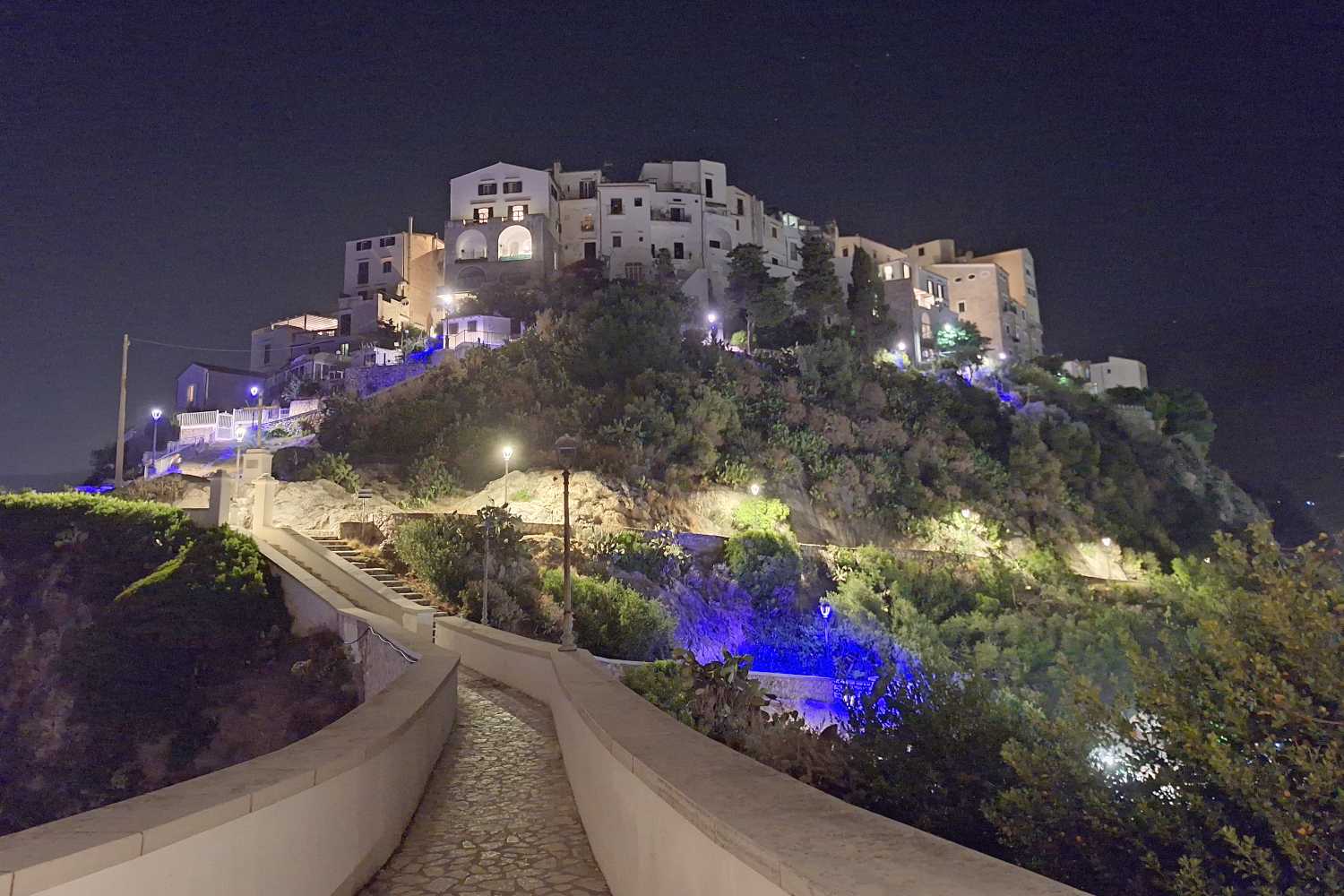
Our journey moved along about sixty kilometers of coast where the Homeric myth stops being fantasy literature and becomes stone, cliff and wavy sea. The Ulysses Riviera extends from San Felice Circeo to Formia, configuring itself as one of the most stunning geographical surprises in southern Lazio. Here, where the reliefs of the Ausoni and Aurunci mountains plunge directly into the waters of the Tyrrhenian Sea, we retraced the legendary routes of the Greek hero, discovering a stratified territory, dominated by a blinding light and by seaside villages that preserve millennia of imperial passages, Saracen incursions and whitewashed architecture.
The lime labyrinth of Sperlonga and the myth of Torre Truglia
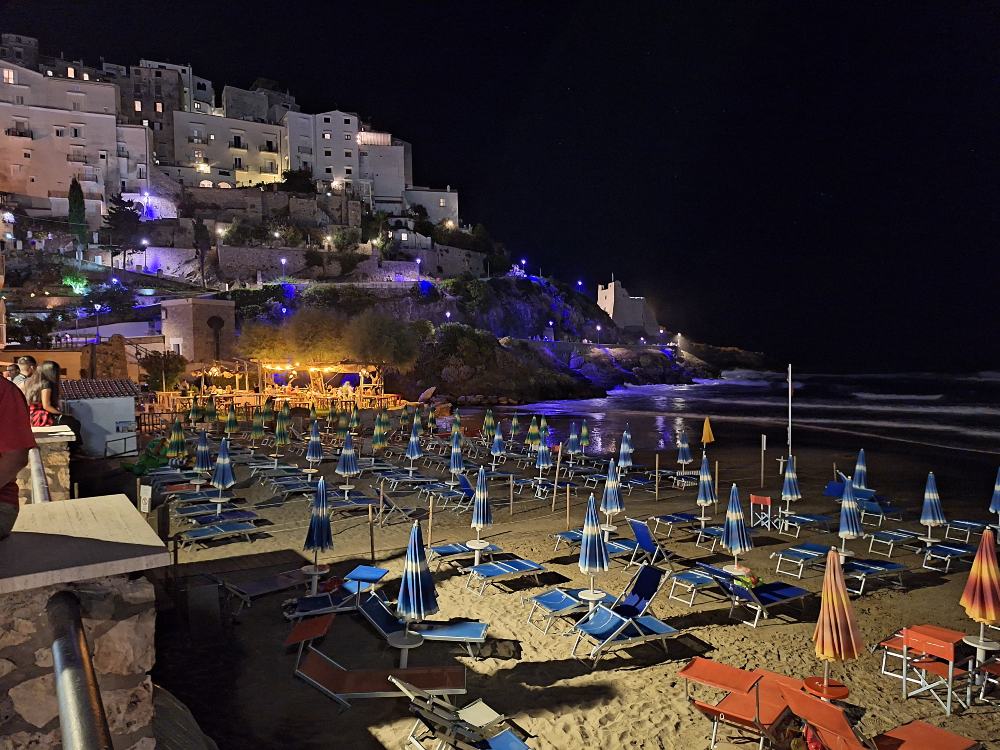
The first impact with Sperlonga immediately evokes the atmosphere of the Cycladic villages, yet we are in the heart of the province of Latina. Perched on a rock spur jutting out towards the sea, this village presents itself as a vertical maze of narrow alleys, arches and stairways that force the traveler into continuous and fascinating ups and downs.
@RebeccaManzi/GreenMe
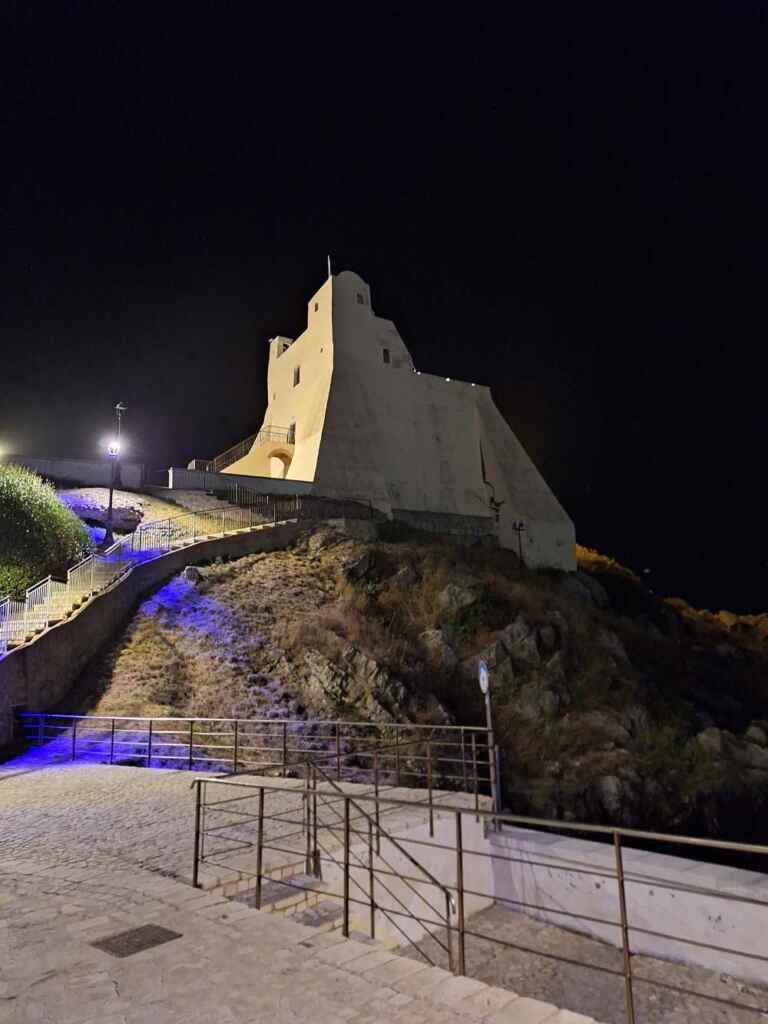
Walking among the white walls, you come across small historical jewels such as the thirteenth-century Palazzo Sabella or the ancient Church of Santa Maria, mentioned as early as 1135. The junction point between the two large sandy beaches of the town is dominated by the majestic Torre Truglia, built in 1532 on the tip of the promontory as a defensive bulwark against pirates and today an exceptional panoramic point for observing the coast.
@RebeccaManzi/GreenMe
The historic center of Sperlonga: a white labyrinth on the sea
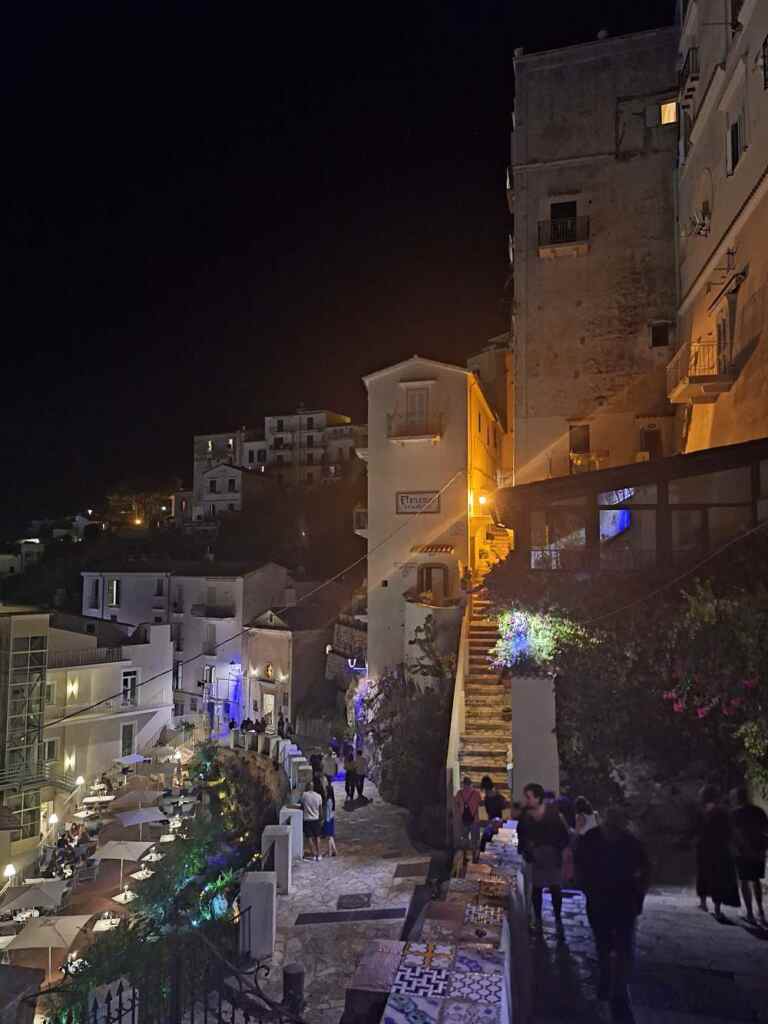
The beating heart of the village is a true medieval urban masterpiece, a perched nucleus originally conceived to disorient Saracen pirates and which today enchants travellers. Exploring the historic center means getting lost in a dense maze of narrow alleys, arches and whitewashed stairways, where the houses seem to support each other. Walking among the thousand flowered landings and artisan shops, you come across unexpected panoramic terraces that offer breathtaking views of the Tyrrhenian Sea and the Pontine Islands.
@RebeccaManzi/GreenMe
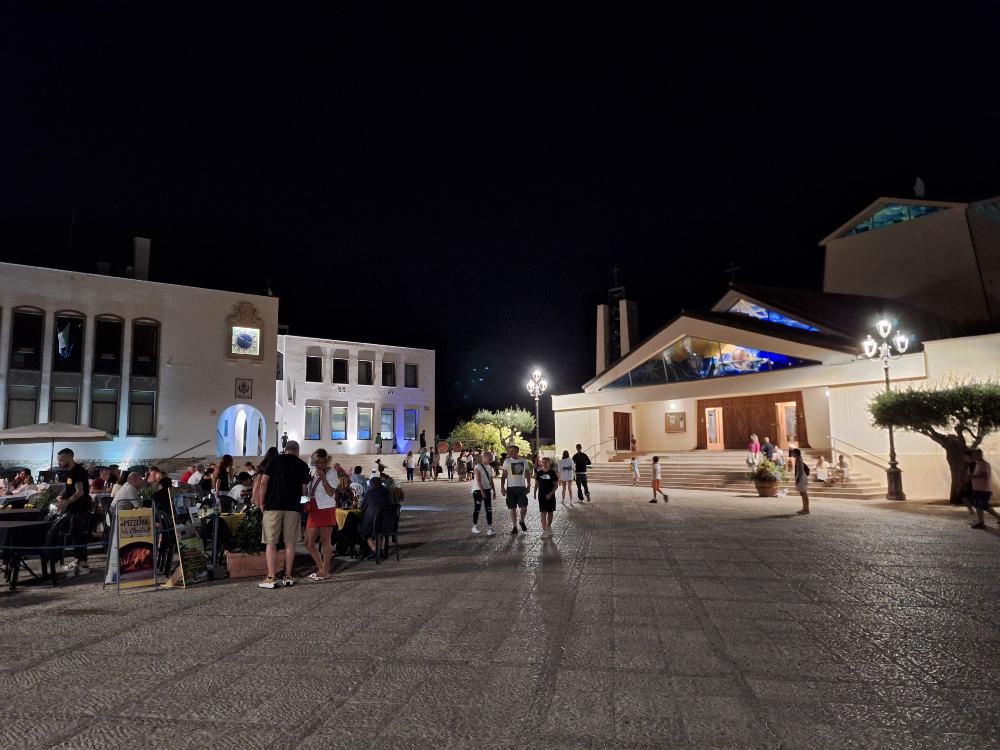
The unmissable stops within the walls include the fourteenth-century façade of Palazzo Sabella, which in 1379 hosted the antipope Clement VII, and the evocative Piazzetta della Libertà, the town’s living room where you meet at sunset. From here, a monumental staircase leads up to the Church of Santa Maria Assunta, the 12th century religious building which houses the wooden statue of the patron Saint Leo the Great and period paintings, before finally descending towards the coast.
@RebeccaManzi/GreenMe
The surrounding beaches, from Canzatora to the Angolo beach up to the wild Bambole beach, offer very fine sand that laps against a sea repeatedly awarded for its absolute clarity.
@RebeccaManzi/GreenMe
Gaeta and the natural spectacle of Montagna Spaccata
The second stage of our itinerary led us to Gaeta, a fortified town with a complex and proud soul, nestled on the promontory of Monte Orlando. The first obligatory stop coincides with a place imbued with sacredness and vertigo: the Sanctuary of the Holy Trinity and the famous Montagna Spaccata.
Here the rock has literally opened into three deep vertical cracks; descending a breathtaking staircase leads to the Grotta del Turco, a gigantic natural cave where in the 9th century Saracen pirates found refuge during their incursions. The entire area is included in the Regional Urban Park, a green lung where the Mediterranean scrub perfumes the air and the paths lead up to the solemn Mausoleum of Lucio Munazio Planco, dating back to 22 BC
The beaches of Gaeta: seven pearls of golden sand and crystal clear waters
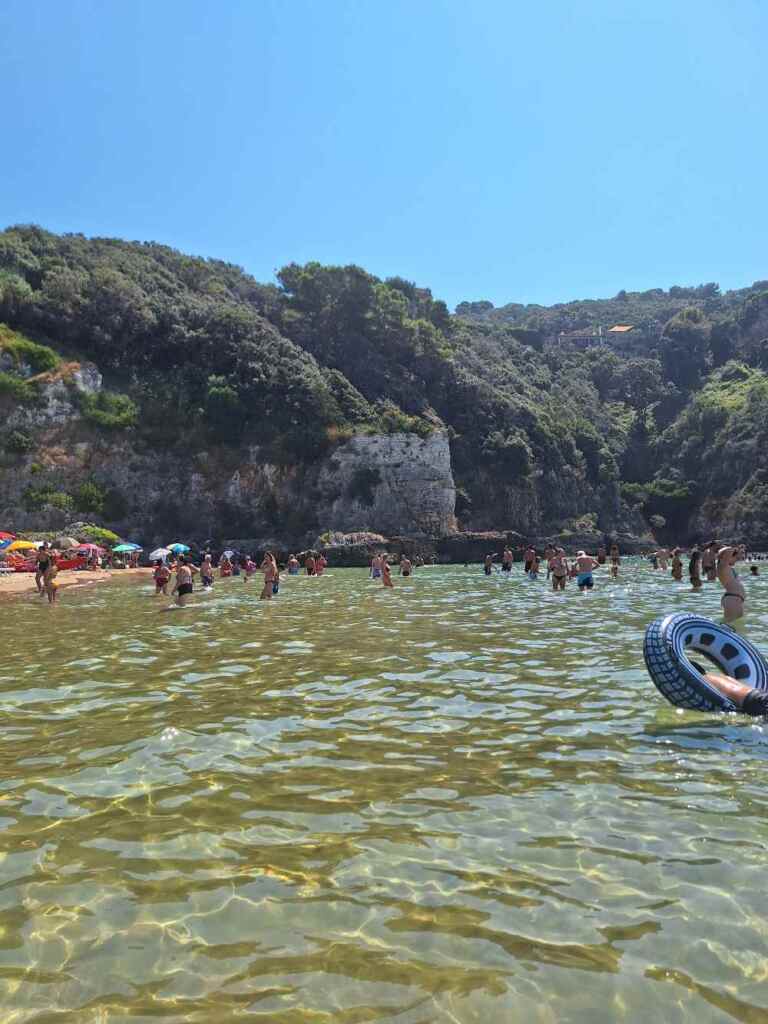
If Sperlonga enchants with its coves and proximity to the imperial cave, Gaeta responds with a simply extraordinary coastline, famous for its seven beaches that wind along the Via Flacca, on the western side of the promontory.
@RebeccaManzi/GreenMe
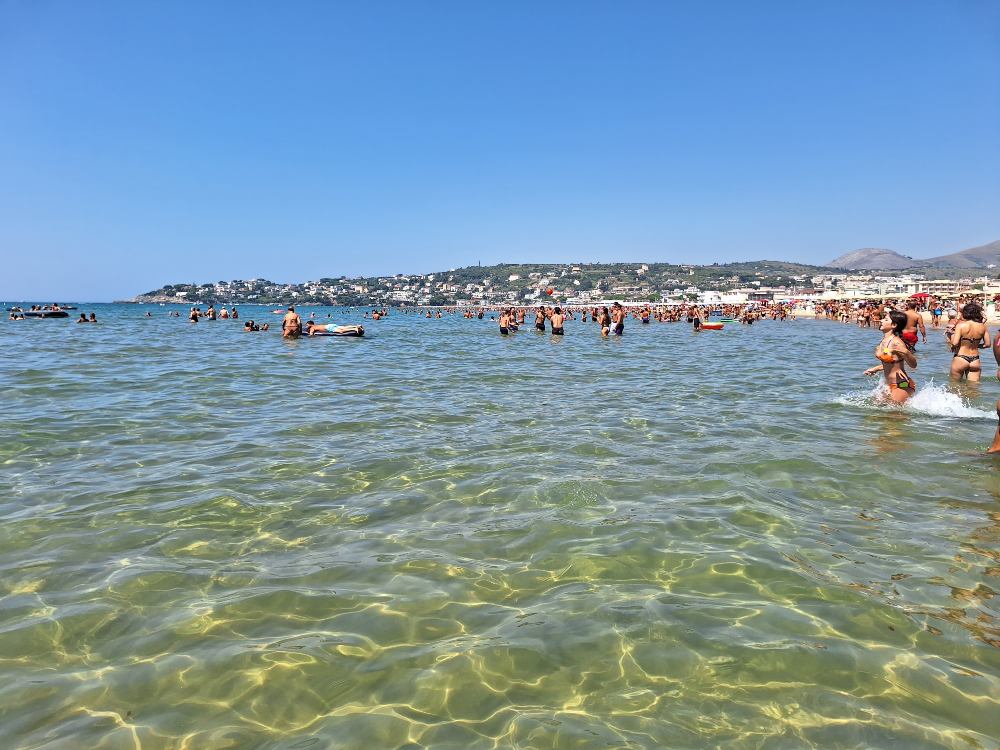
The most famous and spacious is undoubtedly the Serapo beach, the real city lido: a long stretch of very fine sand enclosed between Mount Orlando and the Fontania hill, bathed by a crystal-clear sea and equipped with every tourist comfort. Moving north, you come across the beach of Fontania, a small hidden jewel that houses the archaeological remains of a sumptuous Roman villa that belonged to the consul Gneo Fonteio, where you can dive surrounded by history.
@RebeccaManzi/GreenMe
The Basilica Cathedral of Gaeta: between medieval enigmas and baroque splendors
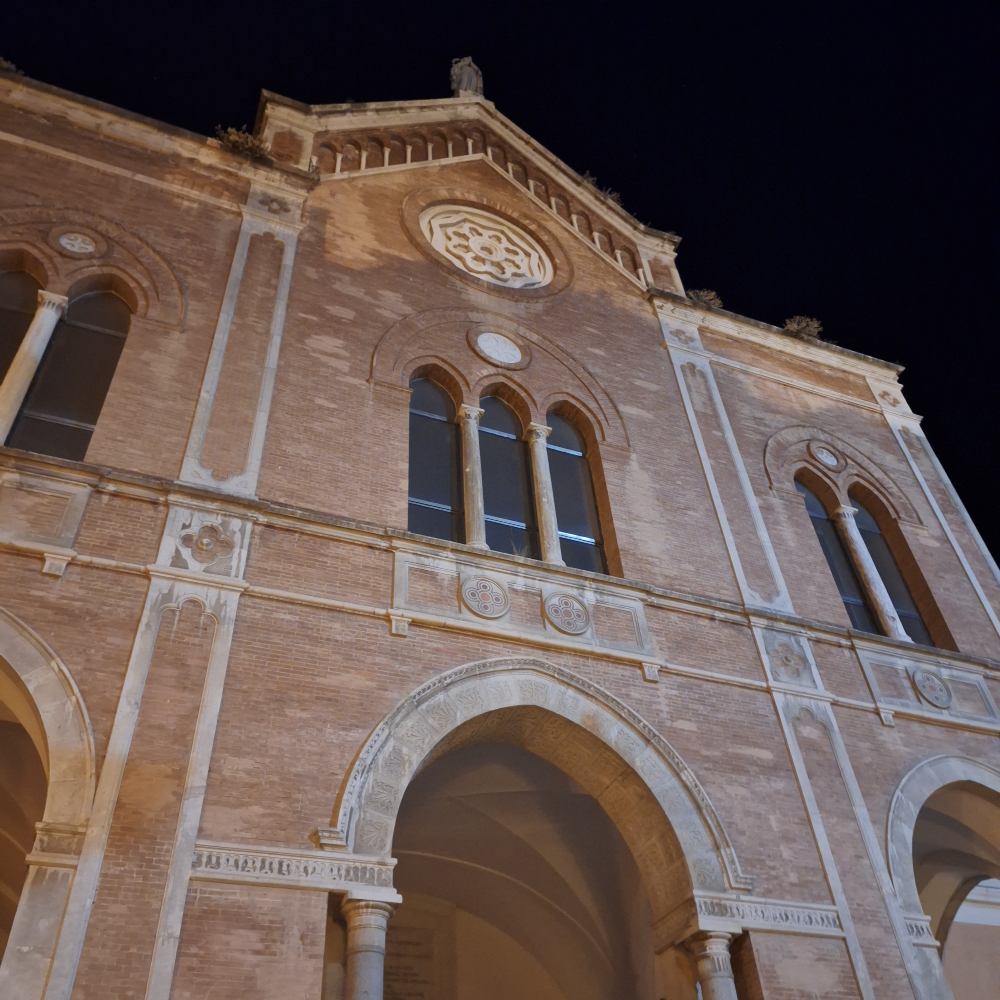
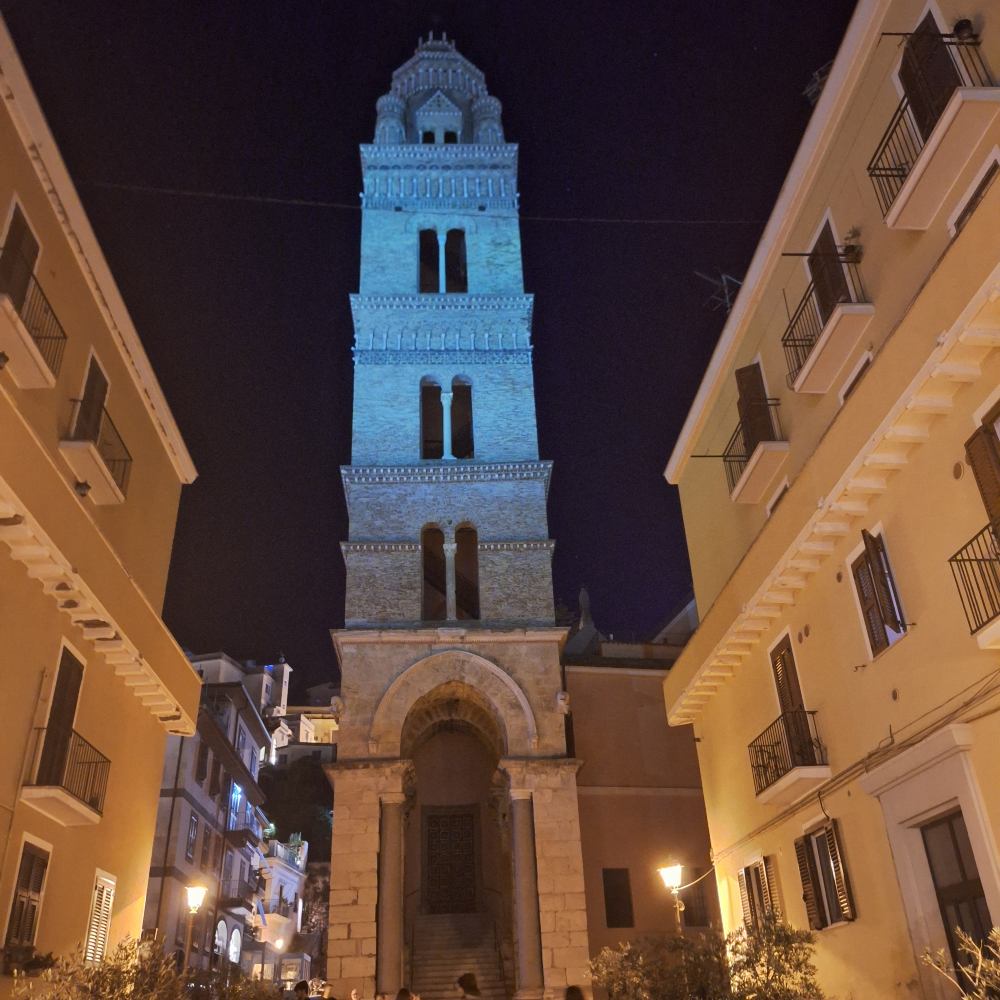
The historic centre, called Gaeta Vecchia, reveals its ancient role as a strategic maritime duchy. The Cathedral Basilica of Santa Maria Assunta in Cielo, an architectural jewel that blends over a thousand years of history of the glorious maritime Duchy, represents its sacred heart. The exterior is dominated by the extraordinary Arab-Norman bell tower almost 60 meters high, completed in 1279, at the base of which are hidden the famous medieval bas-reliefs of pistrici, sea monsters that swallow and reject the prophet Jonah as an allegory of the Resurrection.
@RebeccaManzi/GreenMe
@RebeccaManzi/GreenMe
The city of a hundred churches and the Angevin-Aragonese Castle
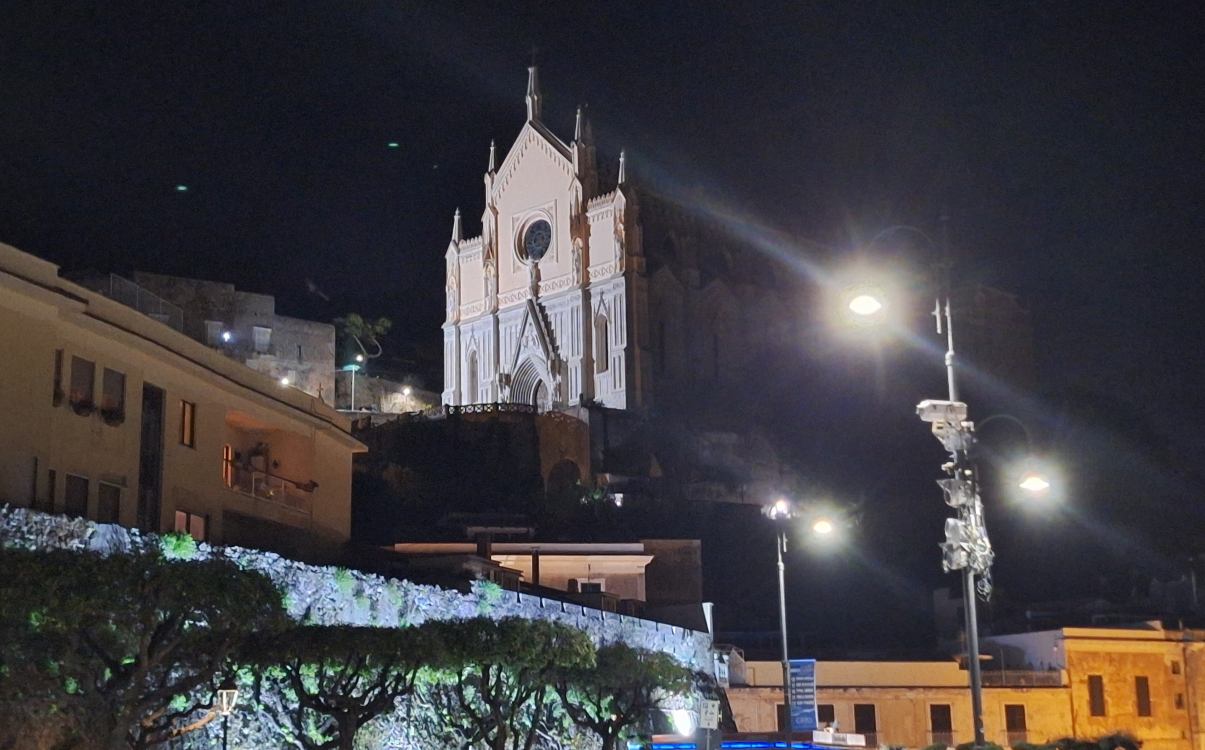
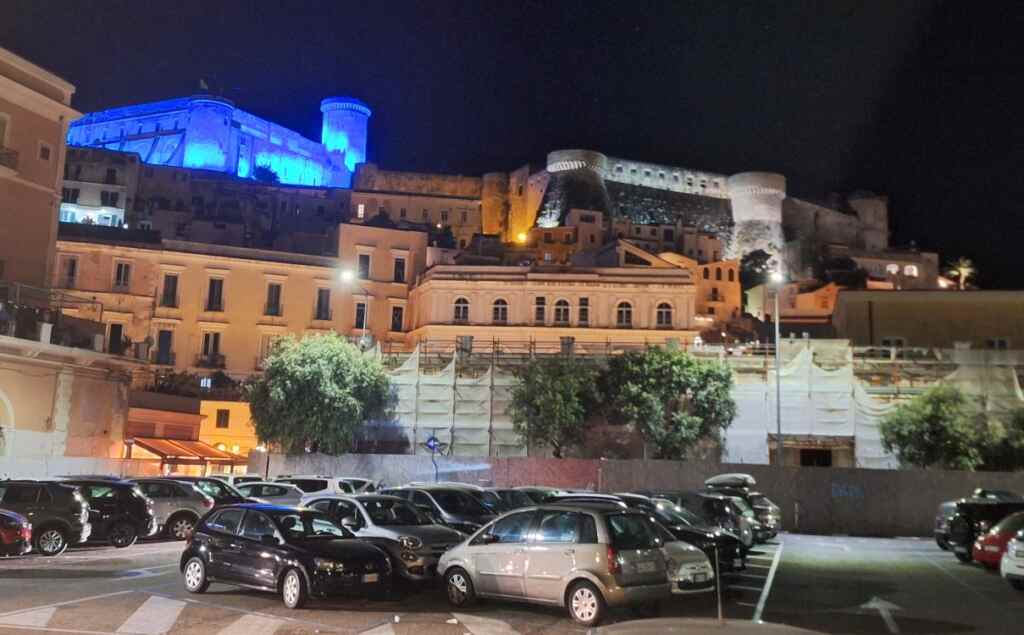
Not far away stand the majestic Arab-Norman bell tower of the Cathedral of Sant’Erasmo and the imposing Temple of San Francesco, a neo-Gothic building which offers one of the most famous photographic views of the city. Dominating the entire gulf is the monumental Angevin-Aragonese Castle, a military fortress divided into two overlapping historical structures, today partially occupied by the Guardia di Finanza and the University, which with its massive walls magnificently closes a path suspended between the land and the routes of myth.
@RebeccaManzi/GreenMe
@RebeccaManzi/GreenMe
