
Lose weight, increase muscle mass, recover faster after training, sleep better, counteract skin aging. On social media, peptides are now presented as the new frontier of wellness, often with promises that seem too good to be true.
The problem is that behind this word lies a much more complex universe. Some peptides have been used in medicine for years, others are the subject of research, while those that are sold online as products for losing weight, improving performance or obtaining anti-aging effects may be unauthorized, not adequately studied and of uncertain composition. And when they are purchased online and then injected without medical supervision, the risks increase further.
The alarm also comes from France, where the ANSM, the National Agency for the Safety of Medicines and Health Products, has intensified controls against the illegal sale of these products. In July the agency adopted new health police measures against sites that sold and advertised substances also presented as GLP-1 agonists.
What Peptides Really Are
First of all we need to clarify. A peptide is not a specific substance, but a small chain of amino acids, the same fundamental components of proteins. In the organism these molecules can perform very different functions and participate in numerous biological processes.
Some peptides indeed play an important role in medicine. This is the case, for example, of insulin, while other drugs used in the treatment of diabetes and obesity belong to the peptide family or are based on peptide molecules. The fact that effective and safe peptides exist, however, does not mean that any product sold with the word “peptide” is equally safe.
It is precisely this distinction that risks being lost on social media, where BPC-157, TB-500, GHK-Cu, retatrutide and other substances are often grouped together under the same label and presented as tools to improve the body or slow down aging.
The new fashion on social media
The phenomenon fits perfectly into a dangerous but now very solid trend on social media, that of finding a substance capable of rapidly modifying the body, improving performance or correcting a blemish without necessarily going through a medical procedure.
So on Instagram and Tiktok, peptides are associated with weight loss, increased muscle mass, physical recovery, quality of sleep, younger skin and even acne treatment.
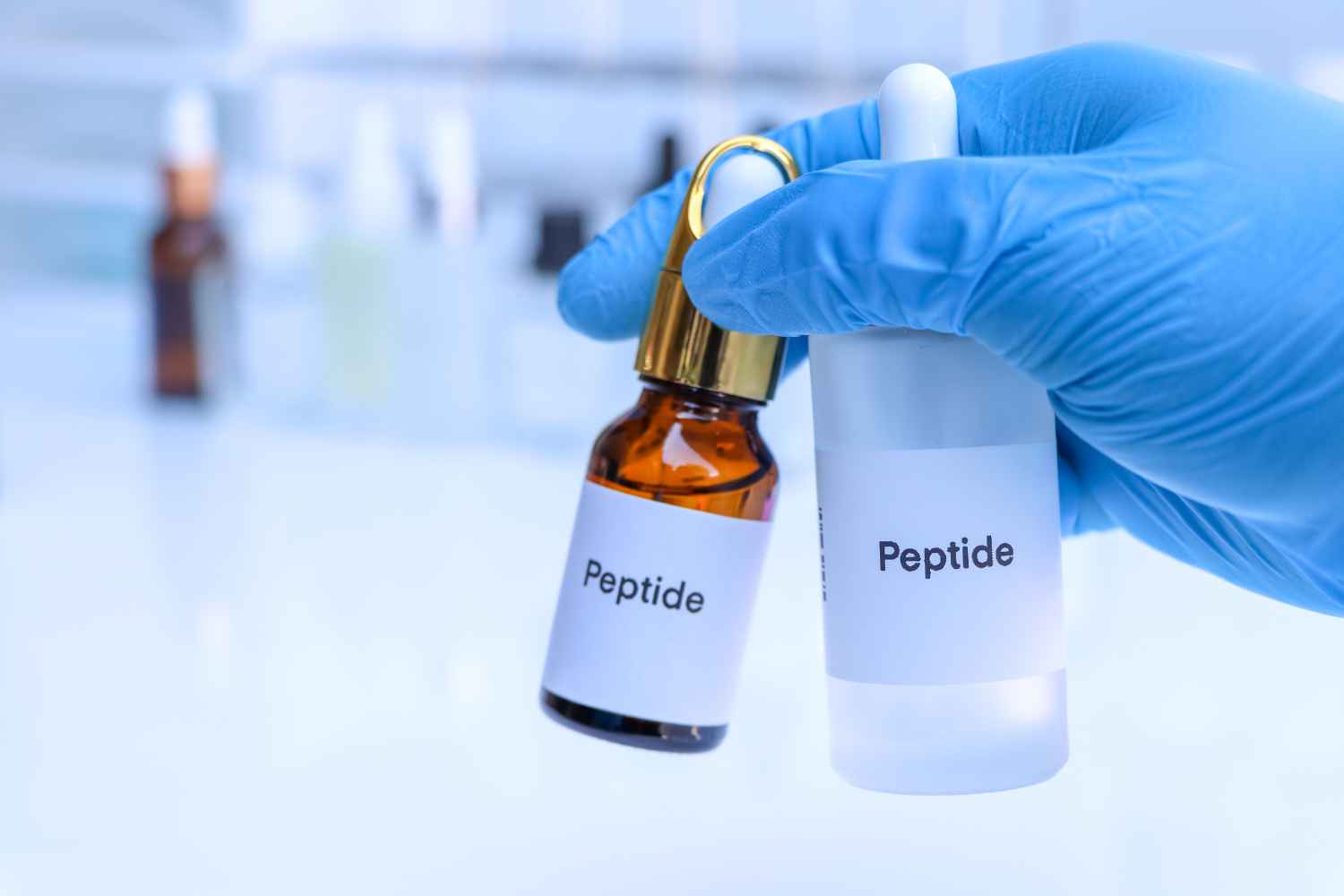
The format contributes to making the phenomenon particularly insidious, many products are in fact sold in vials or injectable pens, with packaging and methods of use that can make them seem like medicines.
But the external appearance does not guarantee anything. The ANSM is very clear on this point: the so-called peptides purchased through the internet, social networks or informal circuits and sold as medicines have not been evaluated by the health authorities and are not authorized. Their composition can be uncertain and their use can cause serious health problems.
Peptides for weight loss
One of the reasons why this trend is growing exponentially is probably the success of drugs used against obesity and diabetes, particularly those that act on the GLP-1 pathways. But there is a fundamental difference between a licensed drug and a substance purchased online.
Semaglutide and tirzepatide, for example, are active ingredients used in medicines undergoing a regulatory process. The product purchased on a website, however, may lack the same guarantees of quality, production control, dosage and traceability.
Even more delicate is the situation of retatrutide, a molecule still in the clinical development phase. The ANSM has included it among the products sold illegally online and presented to consumers for slimming purposes.
When a product is purchased through the normal medicinal circuit, there are controls on production, quality, composition and storage. With a product purchased online outside of official channels, these guarantees may be lost.
According to the ANSM, the product may contain impurities, a substance different from the one declared or may not even contain the expected active ingredient. Added to this is the specific risk linked to the injection: a substance of uncertain composition is introduced directly into the body, with the possibility of causing infections or allergic reactions.
And it’s not just a theoretical risk. The French agency has received several reports of adverse events after using these fraudulent products, and some people have required hospitalization. Reported problems include nausea, vomiting, diarrhea, abdominal pain, significant loss of appetite, dehydration, severe tiredness, dizziness, liver problems, infections at the injection site and serious allergic reactions.
View this post on Instagram
Do not purchase online or without the advice of a doctor
The recommendation is simple: if a peptide has a pharmacological action and is proposed to lose weight, modify body composition or obtain other effects on the organism, it should not be treated as a normal supplement to buy online.
The ANSM recommends not purchasing peptides on the internet, on social media or through acquaintances and not injecting products that have not been prescribed by a doctor and purchased in a pharmacy. The agency also invites you to be wary of packaging with wording such as “For research use only”, “Reserved for research” or “Not for human use”.
Even in Italy a very simple principle applies: the presence of a product on the web does not mean that it is authorized or safe. And even for food supplements, the Ministry of Health specifies that the simple notification of a product does not constitute marketing authorization nor certification of its conformity.
For this reason, when faced with the promise of losing weight quickly or obtaining a more toned body thanks to peptides, the question to ask should not be “works?“, but before that: “What’s really inside and who has verified its safety?” And it’s a question that no influencer can replace with a discount code.
